Art Therapy Case Reflections Classification Guide
Understanding the 10 Layers and 21 Core Categories of Case Reflections
Purpose
This guide explains how to recognize which psychological layers appear in an art-based reflection.
Each layer shows one dimension of human experience, and each category describes a specific process of healing, growth, or integration.
Overview Table
| Layer Group | Core Concept | Plain Meaning | Main Function |
|---|---|---|---|
| Body Layer | Sensory Mindfulness and Body Awareness | Returning to bodily sensations | Rebuilding safety and grounding |
| Energy Flow and Emotional Regulation | Balancing physical energy and rhythm | Calming or re-energizing the system | |
| Emotional Layer | Emotional Expression and Regulation | Expressing and understanding feelings | Allowing safe emotional release |
| Trauma Processing and Inner Healing | Revisiting hurt in safety | Restoring trust and emotional security | |
| Spiritual Layer | Ritual Design and Spiritual Healing | Using symbolic or sensory rituals | Transforming meaning and renewal |
| Cultural Context and Symbolic Ecology | Relating to culture, nature, and symbols | Re-connecting with belonging | |
| Cognitive Layer | Cognitive Reframing and Insight Development | Seeing from new perspectives | Restructuring thought and belief |
| Systemic Thinking and Logical Structuring | Organizing complex experience | Building clarity and coherence | |
| Narrative Layer | Narrative Reconstruction and Life Story | Re-writing personal stories | Integrating life meaning |
| Temporal Reflection and Life Continuity | Linking past, present, and future | Restoring continuity of self | |
| Creative Layer | Technique Exploration and Material Engagement | Exploring materials and process | Using making as awareness |
| Visual Expression and Compositional Creativity | Creating through image and design | Expanding imagination and form | |
| Integrated Writing and Semantic Creation | Integrating art and words for meaning | Turning language into insight | |
| Social Layer | Relational Interaction and Social Connection | Understanding self in relationship | Practising empathy and boundaries |
| Group Resonance and Collective Healing | Creating and sharing together | Healing through collective support | |
| Educational Layer | Educational Application and Curriculum Design | Translating art therapy into learning | Designing growth-based education |
| Career Exploration and Professional Development | Exploring direction and skills | Supporting professional growth | |
| Self Layer | Self-Exploration and Identity Formation | Discovering who I am | Clarifying roles and values |
| Symbolic Exploration and Subconscious Expression | Making the unseen visible | Revealing inner symbols | |
| Action Layer | Behavioral Activation and Daily Integration | Bringing change into daily life | Applying insight through action |
| Future Planning and Visioning | Imagining and planning what comes next | Building purpose and direction |
How the Layers Work (From Ground to Integration)
Think of this framework as a living building:
- Body is the foundation.
- Emotion is the river that moves through.
- Spirit brings meaning.
- Cognition builds structure.
- Narrative connects time.
- Creativity bridges expression.
- Social adds relationship.
- Education expands growth.
- Self centers identity.
- Action translates healing into life.
1️⃣ Body Layer — The Ground of Safety
Feel first, then think.
- Sensory Mindfulness and Body Awareness – reconnecting with breath, touch, and balance. Safety starts when the body feels real again.
- Energy Flow and Emotional Regulation – using movement, breath, or rhythm to reset energy.
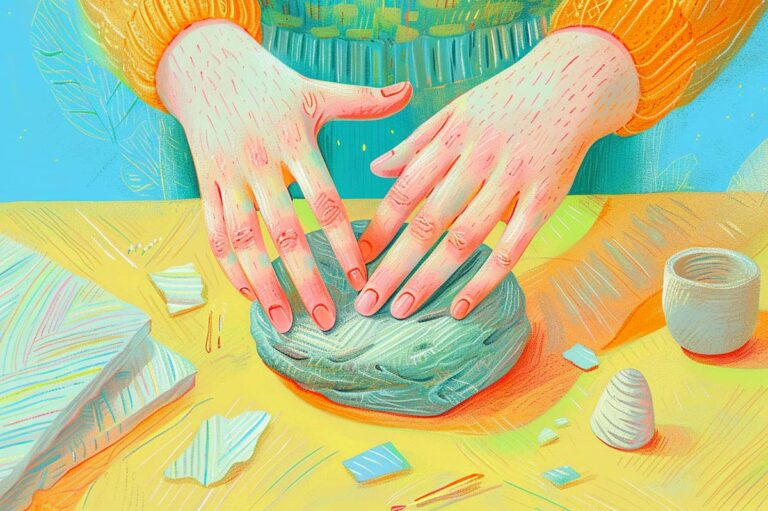
Example: touching clay or walking barefoot to ground yourself.
2️⃣ Emotional Layer — The River of Feelings
Let feelings move instead of stay trapped.
- Emotional Expression and Regulation – giving color or form to feelings that words can’t hold.
- Trauma Processing and Inner Healing – meeting pain in safety and turning it into compassion.
Example: painting anger in red, then adding soft tones of calm.
3️⃣ Spiritual Layer — The Bridge of Meaning
Transform emotion into symbolic renewal.
- Ritual Design and Spiritual Healing – lighting a candle or planting a tree to mark transition and continuity.
- Cultural Context and Symbolic Ecology – connecting with nature, heritage, or collective symbols.
Example: folding paper cranes to represent release and hope.
4️⃣ Cognitive Layer — The Architecture of Thought
From confusion to clarity.
- Cognitive Reframing and Insight Development – seeing experience from a new angle and finding its lesson.
- Systemic Thinking and Logical Structuring – mapping connections between emotion, choice, and pattern.
Example: contrasting mountain and city in a painting to show two states of mind.
5️⃣ Narrative Layer — The Thread of Story
Making life coherent again.
- Narrative Reconstruction and Life Story – turning fragmented memories into growth stories.
- Temporal Reflection and Life Continuity – weaving past, present, and future into a continuous sense of self.
Example: drawing “before – during – after” images to witness change.
6️⃣ Creative Layer — The Language of Making
Creating as a way of knowing.
- Technique Exploration and Material Engagement – experimenting with materials and hands-on learning.
- Visual Expression and Compositional Creativity – using form and image to express complex emotion.
- Integrated Writing and Semantic Creation – adding words or poems to give voice to images.
Example: painting freely, then writing a title or phrase that captures its meaning.
7️⃣ Social Layer — The Field of Connection
Healing does not happen alone.
- Relational Interaction and Social Connection – observing patterns of closeness and distance.
- Group Resonance and Collective Healing – creating together and being witnessed in community.
Example: a group mural or shared light ritual honoring collective memory.
8️⃣ Educational Layer — The Space of Growth
From learning to teaching.
- Educational Application and Curriculum Design – turning art-based methods into lessons for others.
- Career Exploration and Professional Development – using creative skills to shape a career path.
Example: designing a class activity using color to discuss emotions.
9️⃣ Self Layer — The Core of Identity
Meeting yourself through art.
- Self-Exploration and Identity Formation – recognizing inner voices and roles.
- Symbolic Exploration and Subconscious Expression – letting unconscious images speak through symbol.
Example: intuitive drawing of your inner child or guardian figure.
🔟 Action Layer — The Path of Integration
Making healing visible in daily life.
- Behavioral Activation and Daily Integration – turning insight into new habits or relationships.
- Future Planning and Visioning – imagining possibility and taking the first step.
Example: writing a short plan inspired by your artwork’s message.
Quick Classification Steps
| Step | Guiding Question | What It Identifies |
|---|---|---|
| 1️⃣ Identify the Core Function | What is the session mainly doing – grounding, feeling, thinking, connecting, acting? | Primary Layer |
| 2️⃣ Notice Supporting Layers | Which other layers appear secondarily? | Secondary Layers |
| 3️⃣ Examine Material Role | Is art used as symbol or as exploration process? | Determines Creative Layer |
| 4️⃣ Check Meaning Direction | Is the focus on expression, integration, or action? | Healing trajectory |
| 5️⃣ Verify Balance | Is it single-layer or cross-layer interaction? | Classification accuracy |
Easy Memory Map
- Body: I can feel.
- Emotion: I can release.
- Spirit: I can transform.
- Cognition: I can understand.
- Narrative: I can tell my story.
- Creativity: I can make.
- Social: I can connect.
- Education: I can grow.
- Self: I can know who I am.
- Action: I can live it out.
Closing Note
Every layer is a doorway to healing.
Some sessions begin with the body, others with memory, symbol, or action.
One artwork can open many doors at once — from emotional release to new insight to courage in life.
Classification is not a label — it is a map.
It shows how art becomes language,
how creation becomes connection,
and how expression becomes transformation.