
About Me
Personal Background and Life History
It is about my life: where I’ve been, the turns I took, and what shaped me.
Since 2018, I’ve used art-making and simple, self-guided art therapy to change my life—moving from “just surviving” toward healing and making choices. Along the way, I began to outline a small, practical art-therapy approach based on everyday practice. It’s easy to try and gentle enough to hold real feelings.
In the chapters ahead, you may notice traits that look like parts of ASD , ADHD, OCD, HSP , C-PTSD , Borderline Traits, Anxiety, Depression, Dissociationand, Visual Hallucination. I mention these only as observed traits, not as medical diagnoses. My goal is to make the context clear so readers can relate it to their own experiences.
I keep the writing honest and direct. I put emotional ups and downs next to life changes so the journey feels real. Later, I will also share a simple self-analysis: what helped me, what didn’t, and the basic ideas behind my method—so you can adapt them for your own healing and creative work.
I was born on November 13, 1979, into an ordinary family that ran a second-hand motorcycle shop. As a child, I often felt unsure about the world and rarely spoke or smiled around people I didn’t know. I never took the initiative to meet new people or start conversations; I only interacted with someone when a family member I trusted introduced us. Once I felt familiar and comfortable, though, I could be quite talkative.
From early childhood (pre-school), I really loved crafts and coloring, my favorite colors were light pink, blue, and purple. Back then, I couldn’t read yet, but I liked making up my own “letters” ; the one I remember most is the character “米,” which means “rice” in Chinese.
I remember a typhoon day—wind and rain raging outside—when I burst into tears wanting my mother. My older brother held my hand and we ran to the shop to find her without an umbrella. My mother laughed when she saw us and dried me off. I said the sound of the storm was like bees buzzing. I was very afraid of bees back then.
Kindergarten
On my first day of kindergarten, I saw other children crying, so I cried too because I wasn’t sure whether I “was supposed to cry.” At that time I couldn’t speak Mandarin yet—only Taiwanese —but I picked it up within a few days. I attended two different kindergartens; the second one even had computers and a swimming pool. Also my cognitive abilities developed quickly, and I seemed to grasp things at once. But I never really wanted to dive deep into just one thing. Unfortunately the phase only lasted until I was about twelve.
In childhood I was often puzzled by adults’ behavior. Once my mother stirred up gossip between two friends; I asked her why, confused, and she just laughed and said she wouldn’t do it again. Another time, to get a cute new pair of slippers, I cut my old pair and then insisted I wasn’t the one who did it.
Some memories still feel vivid. At a market, an elderly woman dropped a plastic bag of money. My mother said, “Hurry and pick it up and keep it,” but after I picked it up I handed it back to the woman. She thanked me and I felt happy, but my mother scolded me for being “too foolish.” That generation had fewer resources and was used to competing, so perhaps her reaction isn’t hard to understand.
On graduation photo day, the school had us change into white shoes and lace stockings, but the teacher gave me a very old pair and saved the new ones for another child. I felt upset. At the graduation performance, my mother brought my brother to watch, but I couldn’t find them in the audience and ended up performing poorly. I later learned my brother had said he was hungry, and my mother had taken him to get food.
In kindergarten, I often skipped school. I didn’t really interact with the teachers or other kids—my way of existing was mostly through watching, listening, and retreating into my inner world.
My Brother and Me
I have a brother almost two years older than me. He didn’t usually look after me, but there were moments when he did—like the time he stepped in when older kids were being harsh with me. Looking back, I probably took care of him more often:
- When a stranger nearly picked him up to take him away, I ran to get an adult and saved him.
- When he had a fever, I wiped him down to bring his temperature down.
- When he was being teased, I got so angry that I rushed out and hit the bully—even though I ended up crying myself.
Before I turned 10, I had a playful, naughty side too. I used to roughhouse and chase around with my brother all the time, and I loved squeezing myself into tiny spaces, like under tables or inside cardboard boxes. Sometimes I’d hide under my dad’s desk and light matches, letting the smoke sting my eyes until they watered — for some reason, I actually thought that feeling was kind of fun. I also really loved popping bubble wrap, with all those tiny little bubbles that go “pop-pop-pop” when you press them. I could play with it forever, whether I was popping them one by one, twisting it like a towel to burst a whole strip at once, or stepping on it and squeezing the bubbles with my toes.
Grade 1
Before school started, my mother taught me: “If you need the restroom, raise your hand and tell the teacher.” But one day I saw a classmate wet their pants and, misunderstanding that I should do the same, I did it too. At first I wasn’t close with classmates and only talked to the ones in front of and behind me. Once, when I went to the market with my mother, I realized some classmates had privately arranged to go eat together. My mother asked, “They didn’t invite you?” That was the first time I understood that people form connections “in private.”
When I first learned Zhuyin (Bopomofo), the very first thing I did after getting home that day was read the all textbooks. I especially liked Mandarin, art, and science, and I loved going to the library to read biographies.
Every summer, my parents sent my brother and me back to the countryside, which I really disliked: the pit latrine was full of feces and flies, chickens and ducks pooped in the courtyard, and behind the room was a smelly, noisy pigsty. My cousin she had a modern flush toilet but wouldn’t let people use it. I would hold in my urine and stool until I couldn’t bear it, then ask my other cousins to take me to grandmother on the mother’s side’s house to use the toilet.
I didn’t really know what was expected in school. I didn’t realize I had to study and memorize the textbook—until my first test. I got 76 points and thought, ‘Oh—exams require memorization.’ That discovery shaped how I studied from then on.
Grade 2
That year I learned to fight back. A boy in class bullied me; I told my mother when she came to deliver my lunch, and she scolded the kids on the spot. From then on, if I was bullied, I would chase and hit back. Years later, shortly after starting university, a classmate recognized me and said I was the girl who often chased boys after class to hit them—apparently I was quite well-known.
Looking back, that might have been the beginning of me learning how to interact with people—not always in the softest way, but at least I wasn’t hiding anymore.
I also learned some “outside-the-rules” ways to get by. In calligraphy class, we were told not to trace—but most people did it anyway. I followed the rule and only got a “D” (the lowest grade). Feeling it was unfair, I started tracing and often got top marks.
I didn’t want my handwriting to just look good because I traced well. So even in college, I’d sometimes take notes with a brush pen—just to practice making every stroke feel balanced and clean. I guess part of me still wanted to prove I could do it without cheating.
I went to an English cram school. The foreign teacher was impressed with my language ability and spent more time coaching my speaking than with the other children. Unfortunately, I only attended a few classes. (In my generation, formal English didn’t start until junior high.)
In the early years, during Lunar New Year in the countryside, grandparents would assign grandchildren to visit their married daughters’ homes and deliver an invitation to return for the family gathering on the second day of the new year. It was customary for the married daughters to give red envelopes to the children who came. This year, my brother and I were sent to invite our aunt—my father’s younger sister. She took us into her room and handed a red envelope to my brother. My brother asked, “Is there one for my sister?” She just smiled without saying anything. She was actually one of my favourite aunts. But that moment stayed with me—it was the first time I truly felt what people meant by the traditional preference for boys over girls.
What seemed like a small moment left a deep emotional imprint of being diminished. At that age, a red envelope wasn’t just about money—it symbolised being seen, being valued. When one child received one and the other one was passed over, the contrast sent a quiet but powerful message: I’m not being treated equally. Maybe I’m not as important.
This wasn’t just a personal slight; it was embedded in the larger cultural narrative of traditional gender preference, where boys are often favoured over girls. That made the moment feel less like a one-off and more like confirmation of a deeper, systemic hierarchy.
More complex still is the fact that this kind of experience—being overlooked by someone you actually like, or treated unequally in a close relationship—can become the root of later sensitivity. It shapes a heightened need for fairness and recognition, and a deep alertness to even subtle forms of being dismissed.
It shapes a heightened need for fairness and recognition, and a deep alertness to even subtle forms of being dismissed.
WOW……That’s so true…..lol.
Grade 3
We had a male teacher who was new at the school and pretty friendly, but eager to prove himself. He wanted attention from school and liked to show off results. To do that, he’d seat “stronger” students with those who were “struggling,” and told us to help each other during exams. I was placed as one of the strong students.
He used to go around asking other teachers about upcoming test questions, then came back and told us what would be on the exam. Sometimes, just a few minutes before the test started, he’d rush back into the classroom and say, “I forgot to mention this one—here’s the answer.
One time, my seatmate ended up scoring higher than I did—even though he had copied my answers exactly. The teacher had mistakenly given him a higher score. So I went and told him.
The teacher looked at me and said, “Because you both were honest enough to come tell me, I won’t deduct his points.
That moment stuck with me. It was the first time I realized that honesty doesn’t really matter—and that some adults were the very ones asking kids to cheat.
The teacher started a tutoring class at his home. I went, made a few friends, and was somewhat happier, but I sensed that those who didn’t attend were being left out.
That year something else stayed with me: a girl whose looks were not accepted by others transferred into our class, and everyone bullied her. I joined in at first, but later the teacher told me, “She loves reading and often borrows books from the library. After that I never took part in bullying again.
Something happened during this stage which is very important.
We were at the seaside when a little girl’s shoe was carried off by a wave and floated toward me. I bent down to pick it up for her. Her mother smiled and thanked me. That small moment of kindness stayed with me—quiet, but unforgettable.
It was the first time I truly felt joy—and it came from helping someone.
Grade 4
We moved and I transferred schools. At first I shut down so much that during morning exercises I said I didn’t know how and just stood still. A girl said, “you can just do and copy everyone,” and she was right.
That year my confidence took its first big hit. In Grade 3 I often earned the very top marks; in the new class, the teacher criticized my workbook for being too dirty. I realized, “Oh, this gets noticed too,” and afterward I kept my notebooks very clean.
Back then, boys bullying girls, especially new people was almost a daily ritual at school—loud, relentless, and somehow accepted.
One day, my mum brought me lunch. The moment I saw her, tears came to my eyes. She walked me back to class and gave the boys a stern warning. But it didn’t help—they started mocking again: “Who doesn’t have a mum? We all do.” I was furious. That whole afternoon, I refused to sit down. I ignored the teachers and just stood there.
Another day, I finally snapped. I cornered a boy, and he ended up crouching helplessly against the wall. I kicked him again and again until he begged me to stop—and none of the other boys helped him. After that, they stopped bullying me. For good.
Later, other new girls were bullied and some came to ask me for help. I thought they didn’t help me before. And I said, “It’ll pass after a while.” It was the first time I noticed, I have power, but I didn’t help them, and I didn’t care about much.
A girl who had been on extended medical leave came back to visit, and not long after, she passed away. I didn’t know her—I was a transfer student—but that day, people were still chatting and laughing like nothing had happened. I couldn’t help asking, “How can you people still laugh and joke around right now?” But no one really responded. My words just faded into the noise.
I was the kind of person who always arrived early—sometimes far too early—at the place my friend and I had agreed to meet. But that day, I waited alone for over an hour. She never showed up. I’d only walked to her house once, and the way there was full of twists and detours. Still, I remembered every turn. I found her sitting there, watching TV. All she said was, “I didn’t feel like going. It was the first time someone completely flaked on me without even bothering to let me know.
One time, my dad had my brother tied up and was hitting him. I rushed over, threw myself over him, and begged my dad to stop. But a few months later, when it was me getting beaten, my brother did nothing—he just hid.
When emotional needs are repeatedly unmet and support is missing, a child—like me—begins to believe it’s not safe to show feelings. Vulnerability starts to feel dangerous—something that leads only to harm or being left alone. Over time, I stopped reaching out, learned to suppress my emotions, and became hyper-independent and constantly alert in relationships. Even when I deeply cared about others, I often kept my distance. It wasn’t because I didn’t feel—it was because I’d learned it was safer not to show it.
This is how an Avoidant Attachment Style begins to take shape. Not because of emotional absence, but as a survival strategy built on one repeated message: emotional needs are unsafe and unworthy of expression.
And from this, a quiet inner rule took root:
“If no one helps me when I’m hurting, then I won’t let anyone see me hurt again.”
I finally realise where that rule came from—“Don’t cry. Crying means I’ve lost.”
Huh. That’s… interesting.
Another memory comes to mind. One day, my parents were considering investing in a piece of mountain land, so they planned to explore a remote stream trail. The path, they said, hadn’t been walked for thirty years. At the time, I was extremely timid—I was afraid of everything. I sat in the car, crying and begging not to go. But they couldn’t leave me alone in the middle of the forest, so they forced me to come along.
Sure enough, many frightening things happened along the way. We ran into bees and snakes, and had to climb steep rock faces using both hands and feet. At one point, the land broker even pulled out a gas gun to spray a beehive and scare off snakes, but he figured it out there’s no gas inside lol, that made we had to run for our lives. And then, somewhere we had to get down a small waterfall—with no path. I remember grabbing onto a tree root and swinging myself down like Tarzan. I was slow, and at one point, my father grabbed me under his arm like a sack of rice, and we ran—literally ran—through the rocky streambed. It was terrifying and absurd—but looking back, it became one of the strangest and most vivid “adventures” from my childhood.
Grade 5
Our homeroom teacher had taught my brother before and was a good person, though he never gave rewards. A new student transferred in; I treated her kindly, but some friends wanted to ostracize her and even asked me to hide her shoes, threatening not to be friends if I refused. I foolishly agreed. When the teacher asked me about it, I denied it—then saw the disappointment on his face. After that, I never participated in such things again.
I was always the one who took care of others—both adults and kids. One time, during a family barbecue, my aunt fell asleep on a lounge chair. I quietly brought her a blanket and gently covered her. When she woke up and saw what I’d done, I felt shy and walked away. Later, when the adults were dividing up the grilled food, she called my brother over and said, “I saved this big chicken leg just for you.” I felt conflicted. In my eyes, my brother was always the one who got to have fun while I was the one paying attention to what others needed. And yet, it always seemed like the adults treated him especially well—like he got all the warmth without having to try. That moment stayed with me. I wasn’t angry, just quietly confused… and a little hurt.
When a child learns to express love by caring for others, there’s also a quiet hope to be seen and responded to. But when that gentleness goes unnoticed—while siblings who only play and never show care receive special attention—it creates a silent sense of displacement: Am I invisible no matter how hard I try?
If this imbalance comes from elders’ preference for boys, then the neglect isn’t just accidental—it reflects a deeper, culturally embedded hierarchy. Over time, the child may internalize a painful belief: There’s no real place for girls in this world.
And so, the only way to prove one’s worth becomes through caregiving—because being needed is the only time I feel I have value.
Ahhh… That’s why, when I heard Luisa—the strong older sister—sing “Surface Pressure” in Encanto, the lyrics hit me 100%. Especially the line: “Who am I if I don’t have what it takes?” It hit straight to the core… how interesting.
My parents fought a lot, especially that year. I remember when I was little, my mum took me and ran away from home a few times. Once, their fight turned physical. I threw myself between them, hugging my mum tightly so my dad couldn’t hit her. I didn’t know what else to do—I just acted on instinct. But later, my mum told me I should’ve pulled my dad away instead of holding onto her. And while all this was happening, the golden son—my brother and cousin were in the kitchen, casually making instant noodles.
During family conflict, instead of running away, a small child might instinctively step in to protect—this is called a substitute protector response. When no adults step in to stop the violence, the child’s body reacts on its own, even if they don’t have the ability to truly help.
If, afterward, a parent criticises the way the child tried to help, it can turn that protective instinct into guilt and confusion. Over time, this may create a deep belief: “Even if I give everything, it’s still not enough.”
Meanwhile, the emotional dissonance becomes sharper when traditionally favoured male siblings stand by passively, continuing with ordinary routines. That kind of emotional contrast makes the child feel like the responsibility is theirs alone. When this happens again and again, the child may learn: others can’t be trusted, and emotions must be hidden and carried alone.
That’s… interesting. I did feel this way haha.
Grade 6
Same teacher, different classmates. I made good friends, and every day I walked home with a few boys I liked. A very popular boy confessed he liked me; I had liked him too, but the moment he confessed, I felt instant aversion—I still can’t explain why.
We formed a group to rehearse a class dance, and I even volunteered to choreograph, but the performance was later canceled.
The school often asked what we wanted to be when we grew up:
- Grade 4 & 5: a teacher.
- Grade 6: a teacher, a police officer, the president; I also said, “I want to open an orphanage.”
That year my twin brothers were born. They were in poor health, and I often dreamed they died. At night I would secretly check their breathing to make sure they were alive. They were my little treasures; sometimes I called them “good sons” in Taiwanese. Like taking care of puppies, I spent every day after school with them, holding their hands on walks all the way until they were in junior high.
It was my happiest year, yet a shadow appeared. I suddenly noticed my comprehension and memory were getting worse. I couldn’t memorize the Mandarin texts but didn’t want to be scolded and still craved my parents’ praise. I secretly learned to forge the teacher’s signature to pretend I had memorized them, and even altered answers to fight for points. From then on, I began to learn how to “pretend.”
The Starting Point of Defiance: “Stubbornness”
As a child, I slowly shifted from an obedient kid to a “stubborn” one.
In our family, resources and attention were almost always centered on my brother. If he wanted something, my parents bought it right away; when I asked for the same thing—or even for required school supplies—I was often refused. He got things easily, while I had to fight long and hard. I didn’t know how to get what I needed the “smart” way.
Sometimes he’d receive a gift and I would ask, “Why don’t I get one?” No one answered. So I argued, persisted, and threw fits—until I finally got one too.
The pattern kept repeating. I was always chasing fairness, and without realizing it, my parents grew more and more impatient with me.
Other patterns that emerged:
- I had to sort things strictly by color and size.
- Before school I checked my backpack three times.
We changed our household registration so I could attend a better junior high, which meant commuting to another city. That move became the start of a long nightmare—junior high was a dark, unhappy period for me. Severe menstrual cramps and extreme breast tenderness (so painful that a light touch could make me cry) added to the distress, and for the first time I had thoughts of ending my life. My memory and comprehension hit rock bottom; I survived school by rote memorization alone.
Socially, things were so-so. Boys still picked on me—lifting my skirt or shirt—and I again cornered one and kicked him hard enough to bruise his ribs. I also got to know the little gang of “tough kids” in class.
Oddly, perhaps because I looked “smart,” teachers gave me money- and numbers-related tasks starting as early as Grade 3. In junior high they’d ask me to rank or calculate class scores; but if a crowd gathered to watch, I’d stop until they left.
Roles I was given included:
- Assigning cleaning duties (for two different homerooms that shared our classroom)
- Student helper/teaching assistant
- Section leader (discipline, arts, hygiene)
I was never class president, but I did everything else. I disliked morning assemblies and often swapped hall-monitor or duty shifts.
During these years, many relatives died:
- Paternal grandmother and grandfather (mutually resentful; died of illness)
- Maternal grandmother and grandfather (slept in separate beds; died of illness)
- Aunt (misappropriated family funds; died by suicide)
- Uncle (liver cancer)
I couldn’t understand how adults could sob one moment and act “fine” the next—was it all a performance? And yet there were real tears.
At a school fair, a teacher put me in charge of the cash box. I needed the restroom, and a class offered to watch the money. I handed it over. Later the total came up short. I explained what happened, but I still didn’t connect the shortage to me, and the teacher didn’t blame me either.
In Grade 8 or 9, the school started tracking by ability across sections. I had been in the A (advanced) class but asked to move down to B because I wanted to study on my own. Around that time my brother referred me to a famous, very strict cram school. They gave heavy homework and constant tests; if you scored poorly, you were beaten badly. Foolishly, I memorized it on my school over regular schoolwork. Their method was pure memorization—no understanding required—so during this period my comprehension and memory essentially collapsed.
Even after moving to B class, I rarely listened to teachers. I memorized on my own. The noisy classroom didn’t bother me, but to focus even more I sometimes skipped class to study at a cram-study center. This eventually alarmed my teachers, the disciplinarian, and my parents, but I didn’t care, and nothing much came of it.
Math was a disaster. In history, anything requiring chronological ordering defeated me. In geography I could manage regional content, but when it came to wider maps—multiple countries, Asia, the U.S., Europe—I couldn’t cope.
Once during the self-study period the teacher didn’t show up. Many students swapped seats to chat; I also changed seats—but to memorize. Later the teacher asked who had moved and made the others run laps. I didn’t realize I should confess, perhaps because I believed moving for study was “different.” The teacher knew and didn’t punish me.
An older female biology teacher made students who hadn’t done their homework kneel to finish it or slapped them. I was never punished, but it angered me. I talked back to her once; I apologized later, and the matter was dropped.
Just when I thought I might do well on the high-school entrance exams, a classmate lent me a novel—and I fell headlong into fiction, staying hooked until age thirty. My exam results suffered. Even so, I got into a county high school via independent admissions and was also admitted to a fairly well-known private high school. I chose the county school—unaware it would begin another period of unraveling.
Before junior high, my imagination had been astonishing; afterward, it felt like it shut down.
By the way, when I was in Year 8, my brother was in Year 10. Every morning, our mum would drive him to school first, then take me. But he was always slow or dragged things out, so I was late almost every day. At my school, if you were late, you had to stand at the gate as punishment. It was embarrassing. Then I’d get told off by the teacher in front of the whole class. It felt like being punished twice.
I spoke up many times—to my mum and to my brother. Sometimes I was so anxious I felt like I was going to break down. But no one really listened. Mum even yelled at me, “Then take the bus yourself!” But I got home from tutoring at around 10:30 pm every night, then still had to do homework and study for tests the next day. I was exhausted. I didn’t have the energy to figure out the bus. I just kept living with that constant stress.
I know my mum had a lot on her plate—cooking all our meals, driving us around, and looking after my younger brothers, who were only three years old. I could understand that she was tired. But that didn’t make it fair. I could understand her struggle, but I couldn’t accept being treated like I didn’t matter.
By that time, something else had quietly started to change. I began developing stronger, almost OCD‑like patterns—though I didn’t know it then. I had to line things up by size and colour, and anything that could be arranged symmetrically or evenly split had to be dealt with immediately. If I didn’t fix it on the spot, I felt an uncomfortable surge of anxiety in my body.
Other patterns that emerged:
- I had to sort things strictly by color and size.
- Before school I checked my backpack three times.
- As an adult I’m habitually 5–10 minutes late.
- I forget things the next moment and frequently misplace items.
Looking back, I can see that my junior-high years didn’t just overwhelm me—they rewired how I functioned. The environment constantly pushed my nervous system past its limits: physical pain, shame-based school rules, chaos, noise, unpredictable schedules, and no safe space at home. I lost the ability to comprehend and could only memorise. At the time, I couldn’t understand why my brain had suddenly stopped working. But now I see it differently: my brain was doing what it had to do to survive. (That has improved after seven years of art-making.)
I developed certain patterns—sorting by colour and size, triple-checking my bag, always running late, I developed certain patterns—sorting things by colour and size, checking my bag over and over, and always being late (not by choice at first, but over time it turned into a routine I defaulted to, and honestly, I still struggle with it.), forgetting things— they were coping strategies shaped by a nervous system under constant stress. Although I’ve never been formally diagnosed, viewing these experiences through the lens of neurodivergence—ASD, ADHD, HSP sensitivity, OCD traits, and C‑PTSD—has helped me make sense of what once felt chaotic or shameful.
Compulsive sorting gave me a sense of visual and cognitive order in an otherwise chaotic environment. Repeated bag-checking wasn’t just about remembering things—it was about trying to prevent disaster in a world where small mistakes felt punishable. Frequent forgetfulness was a byproduct of cognitive shutdown under emotional and sensory strain. These behaviours weren’t random; they were my nervous system’s way of creating predictability, avoiding harm, and conserving energy in a world that constantly demanded more than it gave back.
It’s interesting to understand what has shaped the way I reflect on life and feel about it now.
In my first year, there isn’t much to say. I wasn’t close with anyone. Our homeroom teacher would have students ask around about classmates’ situations—I was sent once but didn’t say much. It felt like asking students to monitor each other. I remember the class leader borrowed NT$50 from me, promised to return it the next day, and never did. At my school, class leaders weren’t chosen for ability or grades but for who was most noticeable or outgoing.
In my second year I made a few friends and went out with them. Still, I could be stubborn—I’d sometimes ignore people, or decide I should meet new friends and deliberately approach groups I didn’t know, becoming a bit distant from the ones I usually hung out with.
After Lunar New Year, I skipped my 20-minute cleaning duty to run laps and lose weight—though normally I was diligent about those duties.
The principal kept brainwashing us that we were smarter than students at the best schools in the country, and said that even if we failed the college entrance exam, he’d be assigned to a university post so we shouldn’t worry. I ended up not studying—just empty talk! Our biology teacher was lovely, but years later I heard he died by suicide, which shocked me.
I honestly didn’t study much in high school. My math was beyond saving, and I couldn’t even finish memorizing my textbooks. Thankfully a classmate let me copy math answers. In the end I had to retake the college entrance exam. Luckily my family could afford a year of cram school, but even though I practiced math an hour every day, I scored only 29 points. A total waste of time.
Behavioural Patterns and Underlying Mechanisms
When I look at my behaviours during senior high school through a psychological lens, the patterns become clearer—not as personality flaws, but as adaptations to stress and disconnection.
“I didn’t feel close to anyone. I went along with things, but barely.”
Emotional flatness and social disengagement
→ This aligns with the freeze response—when the nervous system, under chronic emotional neglect, shifts into shutdown mode as a survival mechanism.
“Being asked to check on a classmate… it was surveillance, not care.”
Distrust in institutional care
→ Reflects sensitivity to inauthenticity, common in HSP and ASD profiles, and possibly shaped by repeated exposure to environments where “care” was fake.
“I’d also pull away without much reason.”
Approach-avoidance in friendships
→ Suggests trauma-informed relational strategies—testing connection while bracing for disconnection. This can be typical in attachment disturbances or prolonged social invalidation.
“I skipped cleaning duty to run laps and lose weight.”
Controlling the body when external control felt impossible
→ A form of compensatory control. In trauma-impacted individuals, focusing on the body or routine often becomes a way to reclaim agency in situations where the broader environment feels chaotic or dismissive.
“The principal said not to worry.”
Internalised false safety due to misplaced trust in authority
→ I believed him. I thought we really were good enough, so I let my guard down and stopped preparing. But the truth was, my cognitive capacity had already collapsed, and that belief gave me an excuse not to confront it
“I studied math for an hour a day—and still only scored 29 points.”
Academic shutdown and learned helplessness
→ Suggests executive dysfunction and cognitive fatigue. Under sustained emotional strain, the brain prioritises survival over integration, making learning inefficient or ineffective despite effort.
It was an okay period—not as terrifying as junior high.
When filling out my college preferences, my parents insisted on business majors (accounting and international trade) because they believed they would lead to better jobs. I actually wanted English, tourism, or design. Since I wasn’t the one paying, I studied accounting—and had little motivation for it. I even showed up to major exams without the required calculator. I failed courses every year and spent the summers retaking them, largely because I wasn’t interested—and, again, sometimes went to exams without the mandatory calculator. I would even skip quizzes just to avoid taking them, though I still had to make them up later. Since only medical leave was accepted, I faked being sick to get doctor’s notes.
In my freshman year I was (oddly) selected as head of the documentation/secretariat team for the department’s student association—even though no one really knew whether I was a good fit. It was another case of being handed big responsibilities for no clear reason. True to form, I was irresponsible: I had each class fill out the contact list three times, but I never turned in anything. I also served as a floating member of the logistics team and as secretary for the Chinese Painting Club.
Throughout college my mental and physical energy were poor. I was drowsy all the time and often wondered, “Why am I here? What’s the purpose of my life?”
When I started a part-time job in sophomore year, my boss told me that if things didn’t go my way, I got angry—which was true. Before forty, I leaned more authoritarian; I even felt my thinking overlapped with that of the Chinese Communist Party. Perhaps because of that, I understood their mindset—the one that keeps eyeing Taiwan. At the same time, I was chasing freedom and democracy, which made me feel deeply conflicted.
In sophomore or junior year, my brother had a severe psychological break. Trying to take shortcuts and avoid military service, he delved into Zi Wei Dou Shu (a Chinese astrological system) and developed psychosis, claiming he saw ghosts. I suspect some of it was put on, but when I found out, I felt my life was over—that I’d never have my own family because I’d have to take care of him, and who would want to marry someone with a “crazy” family member?
After that, our home was shrouded in gloom. My father had an affair—everything was a mess. My mother went into dramatic suicidal episodes and even dumped the kitchen trash in my room because she thought it was too messy (it really was pretty messy).
I didn’t attend my graduation ceremony. I actually went to the school gate, dressed up and ready, but never went in.
People say college is four years of fun. I didn’t feel that at all—just endless summer retakes, while one family crisis followed another.
First Jobs: Letting the world sand down my edges
At 24, I officially stepped into the workplace. My first job was at a large outsourcing firm handling corporate customer service, where I managed Yahoo! Kimo email support for feature questions and transaction disputes.
Even as a newcomer, I performed well: within ten months I became a top performer, helped draft SOPs and train new hires, and even received commendations from Yahoo’s managers. Right before I resigned, the company tried to retain me with a promotion, but I couldn’t stand the rudeness in some customer emails and wanted to “see the world outside,” so I left. Looking back, it was impulsive—maybe staying would have led to a different path.
Over the next few years I drifted through accounting, administrative accounting, and sales-related accounting roles, none of which went well. I was terrible at accounting (truly); every month-end close felt like crossing a tribulation. Work became a place I kept drifting through.
My Facial Expressions Didn’t Match What I Was Thinking
At some point, I started noticing that my facial expressions didn’t match what I was actually thinking. Even I found it a bit weird—my mind would be thinking A, but my face seemed to be expressing B.
Sometimes people would stop and ask, “What do you mean by that look on your face?”
But to me, there was no hidden message. I wasn’t trying to signal anything. It just felt like my inner state and my face weren’t on the same page anymore.
A disconnect shaped by nervous system patterns and survival strategies
I think this mismatch came from a mix of neuro and emotional factors. Here’s how I understand it:
*Long-term stress and C-PTSD: weakened facial response system
When emotional expression isn’t supported—or worse, punished—my nervous system adapts. Over time, my body learns not to show emotion on my face. It stops being automatic.
So even when I had a clear inner state, my facial muscles weren’t responding the way people expected. My signals were weak on the inside, and my face became either delayed or random.
*Disconnection between emotions and physical signals: a dissociative pattern
Years of emotional suppression, hyper-adaptation, and sensitivity can cause the body to shut down subtle feedback.
This led to: Less instant feedback from my face. A disconnect between what I felt and what my face showed
So overall, I see this as a kind of understandable neuro-response:
→ My brain was moving fast
→ My emotional system was compressed for years
→ My facial expressions lost sync
→ Resulting in: outward responses became messy, while inner thinking remained sharp
Finally know why was it, haha
The world opens: my first long trip
At 28 I left the country for the first time—on a 21-day youth tour in Europe. We stayed in hostels, small hotels, and even manor houses. That journey opened a new dimension: I saw a wider, more varied world and felt the breath of freedom. A belief took root—I can leave what’s familiar.
That same year I met a friend who introduced a patented farming method called Tianyu, which, he said, could restore vitality to the land. I was stunned—how could something so simple and clever be unknown? I later met his father, a so-called “magnetic-field master,” who claimed to adjust people’s fields. I even took my brother; the effects weren’t obvious, but I started doing those adjustments—and kept at it for seventeen years. I eventually worked at their agri-biotech company and spent most of my income there. Some things improved, others got worse—especially the parts involving people. Still, it gave me a bit of distance from my family; otherwise I might have been swallowed whole by the pressure at home.
Living alone and inner shifts
Until age 29 I couldn’t sleep with the lights off; after the field adjustments, I finally could. I moved out to live on my own and adopted an elderly Scottish Fold cat. At first I thought she was old and ugly, but over time her “ugly-cute” became the softest companionship in my life.
During this period I also joined social movements and sit-in protests—like the Sunflower Movement against the “black-box” Cross-Strait Service Trade Agreement. It was mostly a space for young people, but I found long-lost courage and a sense of healing there, as if reminding myself: I can still act for my values.
Spiritual sensitivity and relational breakdowns
Later, I began to see spirits—what people would call metaphysical phenomena—and I became even less stable. Any time I interacted with people, problems seemed to arise: being framed, slandered, used as a tool, or burdened with others’ inflated expectations. It was exhausting.
Looking back, I now understand that my experiences of “seeing something” that isn’t physically there may come from a very natural and explainable process:
My highly sensitive brain detects subtle environmental cues, combines them with leftover sensory impressions, and fills in the gaps using unconscious memories and emotions to construct a complete image.
If the image resembles a human, my emotional simulation systems activate—making the illusion feel emotionally charged, as if it carries presence or meaning.
For a full breakdown of how this process unfolds, see my personal analysis:
How My Brain Creates Visual Illusions: A Clear and Scientific Explanation
After resigning I was invited back to headquarters by a manager, but unfortunately the branch manager who had spread rumors was also transferred back (the branch had closed). She continued smearing me until the chairwoman’s wife stepped in and told her to stop. For years I felt like my soul was watching from the side—as if I wasn’t the one in the driver’s seat. I watched things happen without real control, and gradually concluded: I have no value; I can’t do anything well.
Even on my morning scooter ride to the MRT station for work, I’d be having this ridiculous inner battle over something as simple as whether to turn left at the first intersection or the second. I’d often make a last-second turn, and it’s honestly a miracle I never got into an accident.
Fatigue and withdrawal
My empathy was so strong it became overwhelming, so to stay steady I avoided people, tragic news, and crowded places.
By age thirty-four or thirty-five I had gained about twenty kilograms at that company. The pain of it all made me wish I had no emotions, so I wouldn’t be depressed.
Even small everyday decisions started to feel strangely difficult. Even on my morning scooter ride to the MRT station for work, I’d be having this ridiculous inner battle over something as simple as whether to turn left at the first intersection or the second. I’d often make a last-second turn, and it’s honestly a miracle I never got into an accident.
One day, I casually tried to count some pens on the table—and realised that once I got to six or seven, my brain started to scramble. The pens were right there in front of me, but it felt like walking into a fog. Did I already count that one? Which number am I on now? I tried a few times, and yep—it was real. Ha.
At some point, I found a workaround—I started counting in sets of three: 3, 6, 9, 18… It helped reduce the overload and made the process more manageable.
Looking back, I know this wasn’t about “being bad at maths.” It was more like a few layers kicking in at once:
Functional shutdown after nervous system overload: After years of workplace pressure, family tension, and emotional overload from being highly sensitive and deeply empathetic, my system had gone into energy-saving mode. Counting—something that relies on stable working memory—was just too much. My cognitive resources were already tapped out.
Sensory + cognitive interference from HSP / ADHD / ASD traits (undiagnosed): The colours, shapes, and positions of each pen might have become “noise” rather than just objects. Without realising, I was likely processing too much at once—so the counting loop couldn’t hold.
P.S. One day in November 2025, I was on the MRT and randomly decided to count the people sitting across from me—just for fun. As usual, once I got to six, my brain glitched. So I broke them into two groups of four. And hey—it worked. I actually counted them right. Pretty funny haha.
My family didn’t want me staying in that job. My mum said, “If you resign, we’ll lend you the money to study overseas.” But my father disagreed. He said, “Even if you really want further education, why does it have to be abroad?”
That had long been my wish, so I accepted—and returned my beloved cat to her previous owner to care for her for a year.
I told her, “I’ll come get you in a year.” She was clearly angry—she ignored me, ran away twice, and stopped coming to greet me when I came home. It was the first time I clearly sensed that animals understand human speech—and I could distinctly feel an animal’s emotions and expressions.
And when I was preparing for English to study abroad, I could read a paragraph and understand it, but as soon as I moved to the next one, I’d forget the one before — even though my comprehension was fine.
p.s.
I could even hear electrical hums—the buzzing from lights or an induction cooktop—sounds that turned into a kind of “over-sensitive echo” in my ears.
At 35, I finally set out to study abroad. It had been my wish since childhood, and my family agreed to help me.
Back in college, when my parents asked my brother if he wanted to study overseas, he said no. I said I did—but they told me, “Girls don’t need that much schooling.” Ten years later, I was on that journey.
(By the way, whenever I didn’t do what they wanted afterward, they would say, “Your aunt was right—we shouldn’t have let you get so much education.” It made me laugh; to me, that sentence simply confirmed I have independent thinking and the right to choose what I want.)
Before leaving Taiwan, I studied English for a whole year and felt ready, But once I arrived in the U.S., I could hardly understand anything. Strangely, I could hear every word and every sound clearly, yet I couldn’t make sense of them—my brain felt stuffed with cotton. I took the school ESL course, joined a free English program at a church where the volunteers were kind and sincere, and also found a private tutor, and started regular language exchanges that I still do today.
Life in Dubuque, IOWA
I lived in a campus apartment, the next door lived a family of five—three sons, a cat, and a dog. We shared a few meals together, and they were exceptionally nice.
The church’s volunteer instructors were retired professionals from all walks of life, each with their own expertise. Sometimes we went hiking together or joined events in town.
The other next door lived a Taiwanese pastor and his wife. At first they took great care of me—inviting me to meals, helping me adjust, and occasionally encouraging me toward church. Then, without warning, I felt a strong urge to keep my distance, to cut the stickiness in that “kindness.”
I didn’t really get along with my young Taiwanese roommate. She came from a family with political and social advantages, and there was an invisible sense of distance and pressure in how she spoke and behaved. Oddly enough, I coexisted more peacefully with a Chinese roommate; although she insisted “Taiwan is part of China,” we kept a safe distance and things stayed civil.
Later, an American girl moved in and things got trickier. She never washed pots or took out the trash, and the shared spaces quickly became uncomfortable.
Mostly I came and went on my own, and I felt quite at ease with that. Sometimes I hung out or went on dates, but the interactions stayed superficial, lacked real connection, but the connections never ran deep and they just faded over time.
A married Chinese man once asked me out for drinks. I assumed that since he was married, there wouldn’t be any boundary-crossing. He still made flirtatious moves, so I cut off contact immediately.
There was also a Taiwanese classmate who usually looked out for me and helped with coursework. She had two U.S.-citizen children and a busy life. One day I accidentally overheard a voice message she sent to her husband—it was badmouthing me. After that, I stopped reaching out.
Another Chinese classmate, we barely spoke before. When she was left out and bullied, she confided in me and said she admired how I managed without a group. She started getting closer, but I prefer some distance, so I connected her with the Taiwanese classmate and gently stepped back.
Over time I realized I’m not great at navigating groups of female; everyone felt too sensitive—including me. Interacting with men felt simpler. Not necessarily better—just less complicated.
Seeing myself from the margins
All the little things along the way made me question my worth again:
“Who am I?” “What am I good for?” “Why do I always feel like I don’t belong anywhere?”
Academically, though, I found a small sense of achievement. I genuinely loved assignments—especially a course called Problem Solving, where I scored high almost every time.
But the moment I held a microphone to present, I shook all over and my mind went blank. There was only one exception that whole year—an environmental-technology presentation that went smoothly from start to finish, as if I had finally found where the energy could flow.
After graduating, I considered staying to work, but I had no confidence in my English, didn’t have a car. In the end I stayed only another two or three months, then returned to Taiwan.
Back to the starting point: skill gaps and family loops
On November 13, 2016, I returned to Taiwan from the U.S., age 37.
I was far more confident than before, yet quickly realized—I still lacked practical skills.
So I helped at my father’s scooter shop: bookkeeping, online market, even cooking (insisting on organic, pesticide-free ingredients). Very quickly, that routine pulled me back into a painful daily grind.
A few months later I brought my beloved cat “Moew Meow” home. I’d delayed it for a while and had prepared myself that if her former owner refused, I would understand. Thankfully, we were reunited.
Relationships, again, pushing me to the brink
I dated a man from Texas, 13 years younger—honestly, he was a jerk. I had wanted a bf; he said he liked me a lot and I went along. In reality I became his secretary and housekeeper. After a year, I wished he would tell me want to breakup because I didn’t want to hurt him. He eventually fell for someone else and asked me to “stay good friends.” I replied, “I don’t like complicated relationships,” while cursing him in my head: “May you never be happy.” I was far too good to him.
I also briefly helped with accounting at a CPA firm. The work was tedious, but re-meeting numbers was oddly interesting.
Touching art again: the original self resurfaces
On May 26, 2018, a friend suggested I see a retrospective of Taiwanese painter Wang Pan-Yuan. It changed my trajectory.
His colors and compositions stunned me. In one painting, the color blocks triggered a vivid inner scene—Jiutian fairs dancing in the Mogao Caves at Dunhuang.
One Painting. One Gasp. A Changed Life.( Read More)
After noticing how much I loved art, the other friend asked, “Why not look for work in art?”
I resisted: “I didn’t major in it—and I’m already 39.” His tone felt judgmental, and I stopped contacting him.
But the question planted a seed.
Soul collides with reality: illness, explosion, and restart
That November (11/28), I traveled to Hokkaido. The scenery was grand; the shrines steeped in history.
Aside from the first two days, my emotions were wildly unstable, almost explosive.
At one hostel I dreamed of an earthbound spirit in the form of a child.
At the end of the trip I overate crab legs, had a severe allergic reaction, and itched for nearly two months after returning—my face was scratched raw.
Body and soul said the same thing: You need to change.
Systematic learning: for a career shift—and to stay alive
To change careers, I chose a systematic learning path.
Oct 31, 2019 – May 11, 2020 (government pre-employment program), I studied:
- Graphic design, cultural/creative design, laser engraving
- UV printing, heat-sublimation apparel printing
Still unsatisfied, I went to the Institute for Information Industry and learned:
- Web design, UI/UX, programming
Still not enough, so at Liancheng cram school I studied:
- Video editing, motion graphics/VFX, 3D modeling
During this period I absorbed skills like a person possessed—as if learning could fill the emptiness and anxiety inside.
An explosion of interests: restoring the creativity cut off in childhood
I also reclaimed the creative drive I’d suppressed. In primary school I loved drawing and crafts and was often praised.
In junior high, exam culture shut it down; if I drew at all, it had to be in secret.
In these years I dove into countless crafts and media, including:
- Drawing, oil painting, acrylic pouring, printmaking, silkscreen
- Soap-making, ikebana/flower arranging, metalwork, wax carving, wire weaving, Japanese lacquer, preserved flowers, shimenawa (Japanese New Year rope)
- Ceramics, lacquer-thread sculpture, plaster crafts, cold porcelain/“buttercream” piping, Korean bean-paste piping, candle art
- Aromatherapy, decoupage, Turkish mosaic lamps, concrete planters, archery, horseback riding…
I loved them all, though none became a “profession.” Maybe I don’t need to be a specialist.
A small miracle: the first time I felt “I’m here”
All my life, I had little sense of being somewhere—environments felt like mirages.
At 40, after some months of oil painting, one day it clicked: “Ah—so that’s a mountain, that’s a car, that’s what the world looks like.”
It was like a switch flipping in my senses—as if a color-blind person suddenly, truly saw red.
For the first time, I genuinely felt: I exist in this world.
A Battlefield with My Father (2020–2022)
After moving back home, I worked at my father’s scooter shop. I didn’t expect it, but the familiar nightmare returned—constant friction, blame, and misunderstandings within the family.
Because my younger brothers were about to get married, my father felt I was “taking up a daughter-in-law’s place.” After I argued with my eldest younger brother, he shouted in front of everyone: “Get out!” The next day, I wrapped up my tasks and actually left.
A few months later, he asked me to come back and help. I answered coolly: “Am I that cheap? Are you going to tell me to get out again?”
For those three years, I could hardly talk to my family—especially my father. Arguing became the norm; anger, the background noise.
Sometimes an image flashed through my mind—plunging a knife into his back. I knew it was only an emotional projection, but it felt almost tangible. I could even sense “what force it would take”—absurd enough to be terrifying, and sobering.
In May 2022, my dad tested positive for COVID. To keep the rest of the family safe, he drove himself to an empty house in the countryside that morning. I took the high-speed rail and met him there to take care of him. That same night, I came down with a fever as well, but my test came back negative. About ten days later, once he had mostly recovered, I returned to Taipei—because my mum had also gotten infected, and I needed to take care of her too.
The Cycle in Relationships
Later, on a dating app, I met a New Zealander seventeen years younger than me. We never dated—we are more like hangout buddies. He is bright, follows international news, and has a sharp sense of humour. I enjoy spending time with him, so we hung out frequently.
As usual, I started taking care of things—not because he asked me to, but because I tend to offer help before people even think to ask. When he got sick, I brought him supplies. I helped him find housing and move in. I taught him how to ride a scooter and guided him through getting his licence. Whatever he needed, I showed up.
Gradually, that familiar imbalance returned— I was giving too much, maybe to him it felt natural. And I held the imbalance inside. It’s a pattern that seems never to change.
But when my cat died—followed by two close friends, a political campaign I’d worked hard on collapsing, and being deceived by a guy in Australia. He let me stay in his apartment and said comforting things, and just made room for me to be. And during holidays when he was away, he let me stay at his place. I have private space to rest and unwind, and I help take care of his plants. So he is an important friend to me.
Stepping Out of My Own Sad Movie
After spending so long trapped in negative emotions, my mind would twist almost everything into something negative. One day, an older friend I knew well and really respected said to me, “You know, it’s like you’re acting in your own version of Les Misérables.” In that moment, I thought, “He’s right.”
That comment didn’t magically fix anything, but it did break the spell a little. I started to see how often I was casting myself as the tragic lead. Since then, I’ve been trying—imperfectly, but on purpose—not to sink back into my own private tragedy.
Meow Meow’s Passing: A Gentle Ending
On October 31, 2021, my cat Meow Meow passed away.
I’d known this day would come from the first day I adopted her, and I thought I was ready. In the moment she left, my emotions were surprisingly calm. But when I took her to the pet funeral home and saw her off on that final stretch, I broke down and sobbed.
Her kidneys had been poor for a long time. Later she developed a tumor; her eyes reddened; there was blood in her urine. I tried the vet, IV fluids—she hated taking medicine. Sometimes I wondered if the drugs and treatments hurt her. Other times I admit I was lazy and relied on IV fluids to get by.
In her final years, I treated her almost like a treasure: massaging her every day, brushing her face with a calligraphy brush (her favorite), taking her up to the rooftop to sunbathe when the weather was good (now I wonder if the floor was too hot). I bought toys, held her, nibbled her, and told her every day, “I love you so much.” She didn’t always appreciate it, but it was how I kept the warmth alive.
Paradoxically—
While she was still with me, I often comforted myself by watching other cats and dogs online. Even though I loved her deeply, it seemed that my depression and anxiety needed more dopamine than our bond alone could provide. After she left, I cried whenever I saw videos about pets passing away. Strangely, I haven’t dreamed of her once in these years.
Career Path Change Finally
In July 2022, at 42, I finally made a successful career switch.
I was lucky to find a company close to home—the second one I interviewed. I actually received offers from both interviews, the first being an administrative role at a migrant-worker agency. I chose this one because it had all my favorite things: a laser engraver, a UV printer, a direct-to-garment printer—and coffee.
The work was unbelievably miscellaneous, but I could finally use my love for handcraft and design. I became a fragrance company’s designer / visual editor / custom-product maker / aromatherapy writer / digital marketing & customer support, and even helped with systems integration and automation. I especially loved writing aromatherapy articles and even created a few “aroma psychology quizzes.”
Of course, there were meltdown moments. The boss’s American business partner has ADHD and issues with emotional control and often yells; he has also been sued by a former employee for bullying. A senior staff member has tried to put me in my place. And the most absurd part: they had a brand-new hire—who knew nothing about the products or operations—answer customer calls. I stayed for two reasons: I needed design experience, and I wanted to keep learning WordPress. Also, the machines were just too fun.
But now we all get along well, and the American even calls me his good friend. He openly shared how to use AI tools, set up automation systems, and build websites—with no gatekeeping. It genuinely changed my life. I’d always been deeply interested in this kind of work, and because of that, I was able to build this website myself.
Depression and awareness: from FOMO to JOMO
For the first six months after Meow-Meow passed, I didn’t feel much grief—probably because I was busy switching careers and learning. But around my two-year work mark, I was thinking about death almost every day. It was a strong feeling of “I don’t want to stay alive.” I’m afraid of pain, so I never acted on it—but the feeling was there.
In March 2024, Then I attended WordPress Asia and heard a talk about FOMO—Fear of Missing Out. The speaker said we should learn JOMO—Joy of Missing Out. In that moment something clicked: “Ah—FOMO, that’s me.”
I started letting go of that anxiety—stopped feeling like I had to learn everything or I’d be left behind by the world. In its place, a small, steady calm began to return.
Oddly, when my thoughts finally slowed down, my heart began to race unpredictably at random times.
Later I talked with an elderly friend about it. We concluded it was panic attacks. Once I understood that, they stopped happening. Seeing a psychological process manifest as a physical symptom—and then resolve through understanding—was, to me, strangely interesting.
Healing in Motion: Small Embodied Practices That Kept Me Going
Between 2022 and 2024, to keep myself from sinking too deep into depression and anxiety, besides making art—I also threw myself into a variety of activities. I joined social movements and participated in public protests, volunteered at an animal shelter, went horseback riding, practiced air rifle shooting, took a first aid course, completed disaster response training, and even played paintball.
Looking back, I now see that my impulse to try these physically engaging, hands-on activities wasn’t random. They were small, embodied ways of restoring regulation to a nervous system that had been stuck in survival mode.
When depression dulled my motivation and anxiety kept my mind spinning, movement gave me structure. Touch, tension, coordination—and the kind of focus required in archery or paintball—helped quiet the noise in my head, even if just for a moment.
See some of My Embodied Practices
Resignation and departure
In August 2024, I resigned.
I wanted to spend three months in Australia—not for any specific reason, just a sense that this chapter of life could end. I saw no future at the company, but my boss asked me to take unpaid leave because he knew it would take three people to replace me. He was right—the new hire quit after two weeks. I set off anyway, agreeing to work remotely with my laptop.
Aug 18 – Nov 6, 2024 — Australia.
Risk and unexpected calm
There, I tried skydiving and live-fire shooting for the first time.
Unexpectedly, those high-risk activities brought me an unprecedented sense of calm. I realized the things that truly settle me are, ironically, the ones that look dangerous.
I also volunteered for a week at an animal shelter in Perth. The conditions were tough—cold and water-restricted—but it was a memorable experience.
The veteran, the spark, and the red flags
Back in Perth, I met an Australian veteran with PTSD. We started seeing each other. He took me to the shooting range; our chemistry was good. I’m used to giving and caring, and he called me an angel, said he loved me, and hoped I’d stay. But he was also flirting with other women on dating apps. When I found out, I walked away and continued my trip—to Adelaide, Tasmania, Melbourne, and Canberra.
I later discovered he’d slipped a spent shell casing into my bag. I didn’t know if he meant harm, given I’d be flying through security. He said it was a keepsake. A week later he started calling daily; we’d talk for two or three hours. He asked me to come back to Perth after my trip, and I was tempted.
When I returned, he took me to a friend’s birthday party—new for me. I drank a lot of whisky and ended up vomiting at the party and in the car ride home. It was almost funny: so this is what drinking to the point of puking feels like.
Soon after, I saw him flirting on a dating site again, then blaming me for noticing the pop-up on his phone. I messaged a friend about it and cried that night.
The next day I flew back to Taiwan. I expected a period of upset, but not a single tear came—though part of me thought I should cry to release it. Two months later, the guy called—and then kept calling every few days. If he’d called within a month, I might have flown back to him. But it was too late; I’d regained my clarity.
By then I was clear-headed: he had narcissistic traits and a way of chipping at others’ confidence—not a good partner. I messaged him: “I don’t see a future for us. To avoid any misunderstanding, I’m going to block you.”
Honestly, I should have blocked him earlier, but I kept waiting for him to call—like proof that I still mattered.
Death, and a quieter interior
While I was in Australia, I learned that someone who’d played a pivotal role in my life had passed away—a wise elder who’d been a “father figure” to me for seventeen years. I used to ask his advice. About the Australian man, he’d told me he wasn’t a suitable match. I didn’t listen.
When I heard of his death, I felt no sorrow. I’ve rarely felt much around human death; I tend to see it as neither good nor bad—just a fact of life.
Back in Taiwan: learning, experiments, and a calmer social life
After returning, I dove back into making and learning: metalwork, wax carving, candle art, aromatherapy, decoupage, Turkish mosaic lamps, concrete planters, leather bags, Krav Maga, booked EMT-1 emergency medical training, and I joined recall campaigns and charity marches.
Also over the last two years, I’ve adjusted how I interact with people. I used to attend events without speaking or showing what I could do—people assumed I knew nothing.
It’s like a “social experiment”: I let myself show humor and capability. Immediately, more people approached me, asked questions, even asked to keep in touch. I’ve realized that socializing isn’t actually that hard, even if I’m just pretending to be a people person.
A Pulled Muscle and Another Small Battle with My Father
In March 2025, I messed up my glutes and thighs pretty badly after doing squats while playing with my niece—I’d never done squats before, and definitely overdid it. A few days later, my dad choked while eating, and I jumped in and used the Heimlich maneuver I’d learned the year before to save him. It worked, but in the process, I pulled my already-injured leg muscles even worse.
To make things worse, I didn’t really know how to handle muscle injuries at the time, so I went and got a massage on that area… which ended up backfiring horribly. I could barely get out of bed for days, and it took me almost half a year to fully recover. Honestly, kind of ridiculous—haha.
Then, just a few days later, my dad said he wanted to visit this massive Chinese-style mansion owned by some big-shot media tycoon. The ticket was NT$3,000. He asked my brother—his golden son—if he wanted to go. I was right there too. I wasn’t even interested in the tour, but a part of me felt like, Hey, I literally just saved your life. Shouldn’t that be worth something?
Unsurprisingly, he told me I’d have to pay for myself. So I kind of mean and on purpose: “I just saved your life. Is it really worth less than 3,000 bucks?” Yeah… I totally meant to say it that way—haha.
Some lessons I’ve learned before turning 45
Believe in love—but don’t give yourself away too fast.
Let time show you whether someone knows how to hold what you offer. When you give all your love and strength too quickly, people won’t just take it for granted—they might keep taking from you, even after they’ve broken your trust.
From Strength, With Sincerity
Ask your heart, “Does this love who I am?”
The voice, the body, the flame, the plan.
Is it born from strength, not fear?
If yes, my dear… you’re still sincere.
Here’s a song that goes with this piece — take a listen: All of Your Being Belongs
Since turning 39, I’ve actually come to enjoy difficult things. I throw myself into learning new knowledge and skills almost aggressively, and facing tough problems — and the intense pressure of figuring out how to make them work — feels like a kind of “mental self-torture” that even excites me.
Tiny Changes That Meant a Lot
One day, on my scooter ride to work, I realised I had been living in a constant state of defense. My mind was always rehearsing what I would do “if something happened” — how to protect myself, how to fight back. No wonder my body was always tense and my face permanently frowning. Once I became aware of this, I was able to let go of that constant hypervigilance, while still keeping a basic sense of safety.
Another day, I noticed that when I fall asleep, my wrists tense up and curl tightly inward, like a T-rex’s arms. Sometimes I wake up and notice a wrinkle between my eyebrows, which made me realize that my body is actually very tense while I’m sleeping instead of truly resting. So I started deliberately making myself relax my hands — at first I even had to hold on to the edge of the bed to keep them from curling up. After about three months, I finally managed to get my wrists to relax.
After years of being late and constantly on edge, I also started to wonder why I kept leaving the house only at the point when I already knew I’d definitely be late, then spending the whole journey extremely anxious and stressed. I began to suspect that I was addicted to that rush of adrenaline — that maybe those moments were when I felt most alive. Even now, I’m still late almost every day, but I’ve managed to take the anxiety and panic out of it. The shift in mindset felt so strangely interesting that I eventually even wrote a short piece about it: A Simple Art Therapy Practice: Taking Out the Stingers.
A Sharp Turn in My Life Again
In April 2025, I began rethinking the road ahead.
“Should I start a business and teach handcraft workshops?”
The thought kept circling in my mind.
At the same time, a deeper question surfaced: What would that truly mean to me?
Amid those questions, a new idea flashed: Over the past seven years, I’ve gone through profound transformation and healing through art-making. Could I use my experience to help others too?
I started researching and was surprised to find that art therapist is a real profession. Thinking back to my trip in Australia—and how much I appreciated the people and the landscape there—I looked into master’s programs and ultimately set my sights on La Trobe University.
In June 2025, I formally began building a website focused on art therapy—hoping that concrete action would open the next chapter of my life.
Three months later, the familiar pattern returned—a sudden drop in enthusiasm, my momentum stalling.
I know this about myself: I burn bright but briefly; I start strong and fizzle out. This time,
I chose to pause and give myself a few days of real rest.
Then I started writing down every life fragment I could remember and analyzing it, as if composing a deep self-case study.
During this period, I was also showing up in the world in different ways—marching in recall protests, attending a Jane Goodall talk in June (one of my lifelong idols), and joining Krav Maga training in August. These moments, scattered as they were, reflected a quiet shift: I was testing how my inner healing could meet the outer world.
One turning point came from my involvement in the 2025 recall movement.
From February to August, I actively participated as a volunteer in a citizen-led campaign to recall around 30 opposition legislators from the KMT. These lawmakers had been obstructing key bills, slashing public budgets, and undermining democratic processes. We believed recall was a constitutional tool for civic resistance. But on July 26, the movement officially failed.
That loss totally crushed me. Just when I thought public awareness had matured, reality punched me in the face—really hard.
And yet—it was also a moment of clarity. I realized I needed to shift from reactive politics to foundational transformation. That’s when I completed my WuSheng Healing Module and made the decision to pursue art therapy more seriously—hoping that one day, I could bring this work into education. To help people develop self-awareness, understand their rights and responsibilities, and resist media manipulation.
Back to my life story writing brought an unexpected sense of steadiness. Luckily, by mid-September, I eased back into the rhythm of building the website, and by October, I have been formally preparing the materials for my application.
Strangely, thoughts and information kept pouring out of my mind like a spring. Life is still full of uncertainty, but the background noise in my head has almost completely faded. Between mid-September and the end of November—just two and a half months—I managed to complete:
- Wusheng Healing Module
- 4 Art Therapy Modules
- 6 Art Therapy Explained
- 19 songs about life, co-written with AI tools
- 4 Case Reflections
- 1 Article Response
- 3 Stories Behind the Art
- 1 project outline for Strategic Vision Architecture Projects
- 1 Art Materials Overview
- 3 Page: Core Values and Vision, Sitemap of Soulful Expression, Creator’s License
And all of this was done outside of my regular job and craft classes—just in the small pockets of time I could find.
Looking back, I honestly feel the volume of output is kind of crazy. What’s funny, though, is that my memory is still really bad. When I’m in it, I’m like a genius connecting everything.
But once it’s done? No clue what I just made. Sometimes I read something back and think, “Wait, I wrote this? I sound like a genius ” Haha.
Sometimes I send a message, and when someone replies a minute later…
I’m like, “Wait, what did I even say?” It’s like my brain clears the cache—instantly.
Perception and Neurocognitive Patterns
- Since childhood, people—both in Taiwan and abroad—have often said my thoughts are “strange” or “different.”
- I used to be extremely startled by sudden sounds.
- For over a decade, I couldn’t process written information. I had to rely on auditory input, visual cues, real-time observation, and environmental context to understand things.
- My memory doesn’t work in a searchable way. Images or memories flash and vanish in under a second. This has slightly improved in recent years.
- If I don’t act on an idea immediately, I’ll forget it the next moment—unless a similar situation triggers the memory again.
- When people reply to my messages, I often don’t remember what I originally wrote.
- It feels like the information wiring in my brain is disconnected—like broken circuits or sudden power outages.
- If ants invade my space, I kill them one by one (by hand or with fire) and leave the bodies behind—as a message to other ants to stay away.
- My jaw once locked shut. I didn’t see a doctor—I slowly forced it open myself.
- I hate mess, yet struggle to keep my space clean.
- I often place things where they “make sense” to me in the moment, then later forget where I put them (like my wallet).
- If I don’t finish a task all at once, I lose the mental thread and can’t remember how I did it or how to resume next time.
- I can often sense someone’s family dynamics or personal background just by looking at a photo.
- I can usually discern a person’s thinking style from their voice, gestures, facial expressions, writing, or tone of speech.
- From scattered fragments of information, I can often intuit broader global trends or political shifts.
Conclusion: Art and love as Lifeline
Looking back across these 45 years, I see a life marked by struggle, fragmentation, and countless moments of feeling lost. There were times I couldn’t understand the world, times I don’t trust people, and long stretches when I couldn’t even trust myself. I’ve been broken down by family dynamics, crushed by mental situations, and nearly erased by my own hypersensitivity. Yet through all of it—the cognitive collapse, the toxic relationships, the dissociation, the grief—something kept pulling me forward. Art became my lifeline. Risk became my teacher. Self-reflection became my medicine.
A Piece of Real Joy in My Life
Even though so much of my childhood and adolescence felt heavy, there were still pockets of genuine happiness woven through it.
One of the brightest parts was helping take care of my twin brothers—from the time they were babies until they turned twelve. I played with them, spent time with them, and simply enjoyed their presence. They were my little treasures—or my pets, haha—and in those moments, I felt something warm and uncomplicated. Something very close to real joy.
That same feeling returned 20 years later, when my youngest brother had two daughters. Spending time with my nieces—playing with them, helping them settle their emotions, gently guiding them to express themselves—reminded me of a part of myself I don’t always notice: the part that is naturally gentle, intuitive, and deeply attuned to the inner world of children.
And then there was Meow Meow—my elderly Scottish Fold cat. At first, I thought she was a bit odd-looking, but over time, her grumpy-soft presence became the quietest kind of comfort. She let me hold her, nibble her, talk to her. She hated taking medicine but loved sunbathing on the rooftop, and I’d brush her face every day with a calligraphy brush, just the way she liked. Caring for her softened something in me. It gave my love somewhere to land. And in return, she made me feel like home was wherever she was.
Caring for them—my brothers, my nieces, my cat—wasn’t a duty. It felt like a quiet kind of happiness that showed up all on its own.
And it reminded me that even in a life shaped by struggle and survival, there are still moments where love flows easily.
The Art of Unfolding Light
A Journey of Emotional Alchemy Through Creation
In the flow of colour and line,
Emotion begins to loosen,
And silence gradually finds its voice.
Those tangled fragments,
Begin to reveal frames of imagery and pulses of rhythm,
Layer by layer, they arrange light and shadow,
Becoming visible;
Wave by wave, they weave sound and tone,
Becoming audible.
When creation moves through your weary, burdened layers,
It holds you —
And gently untangles you.
In the striking of metal,
Scattered breaths gather into rhythm,
Forged into refined and grounded inner practice.
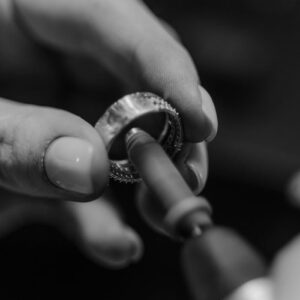
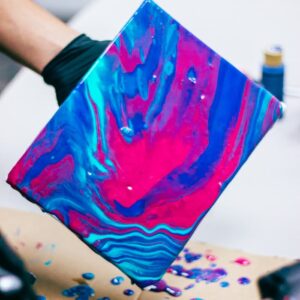
In the flow of pigments,
Scattered memories seep through colour,
Settling into clarity and resilience.
Knots of the past,
Are released in the motion of your hands;
Buried joy and innocence,
Are gently awakened through creation.

In the carving of woodgrain,
Tangled emotions follow the grain,
Gradually revealing an inner grain —
A pattern the soul can follow.
In the burning of fire,
A sluggish will,
Awakened by flame’s warm insistence,
Transforming into steady inner drive.
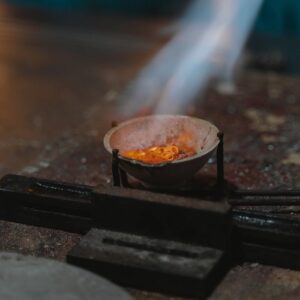
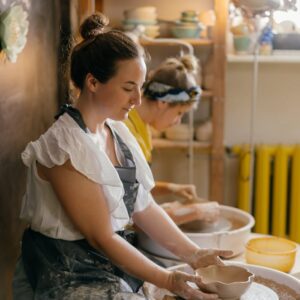
In the shaping of clay,
Floating emotions are settled by your hands,
Forming a shape
To safely rest within.
Creation is not a showcase of technique,
But a deep purification and summoning.
Art is not just an extension of tools,
But a baptiser of the soul,
An awakener of wisdom,
A true guide.
Now the sacred wind brushes away the dust,
And the soul, after the settling,
Begins to reveal the contour of its inner light.
Consciousness stirs with the light,
A path once present, yet forgotten,
Quietly rises into its original arc.
The wisdom within, long shrouded,
Ignites again — radiant and sure,
Carrying warmth and direction.
From here,
You no longer merely bear the weight of life,
But in the moment the dust is swept away,
The seed of light emerges.
Light once veiled in dust, the inner flame
Is brushed awake by artful hands —
Now lit, it will not fade.
It leads you back to your essence,
Spreading seeds of light,
To soften and bless the world.
And what I do,
Is to hold this space of transformation,
So that change is no longer a hope —
But a presence already unfolding.