Into the Inner Ocean: Self-Rescue, Swim, Dive, Grow Gills
Before you can breathe beneath the surface,
all you need to do
is keep your head above the water.
Learn—
how not to sink.
Your face rests between air and tide,
your breath skimming the seam where light dissolves.
Your feet still find the stones of the shore,
their coolness whispering:
you are still safe.
You are tense, yet you breathe.
And you begin to know—
to float is already a victory.
You need not plunge into the depths of emotion.
It is enough, for now,
to rest upon the surface,
to find stillness among ripples,
to coexist with the waves.
You start naming them—
anxiety, anger, sorrow…
and as you speak their names,
they lose their power to frighten.
You lower your head,
submerge your face,
and listen to the silence below.
Your hand still holds the pool’s rail—
a quiet promise of safety.
You whisper to yourself:
“I can rise.
I can hold on.”
You hold your breath,
protecting the fragile balance
you have begun to build.
A brief descent,
then you return to the light.
After a few gentle trials,
you release your hand,
yet stay within reach of the shore.
You float, you tread, you find your breath again.
Your movements soften,
the rhythm of the water becomes your own.
You learn self‑rescue—
not through struggle,
but through tenderness,
by letting your body remember
how to float.
You place a small stone in your pocket.
When the water grows cold or the waves too high,
you know how to find your way back.
You feel the weight of your feet upon the earth.
You touch the stone’s rough skin,
and it brings you back—
to your body,
to what is real.
You practice breathing—
four seconds in, seven to hold, eight to release—
an anchor
that steadies you in the present.
You learn to breathe,
not to resist the water,
but to live with it.
And then,
you begin to swim.
Your chest loosens.
Emotion no longer drags you down.
The water grows kind.
You master new strokes:
Sometimes the breaststroke—
speaking your needs with gentleness.
Sometimes the freestyle—
releasing built‑up energy.
Sometimes the backstroke—
gazing at the sky,
trusting the current to carry you.
There are days you return to the shallows,
and you no longer feel ashamed.
You know—
returning to shore is also part of swimming.
One day,
you dive.
You take your snorkel and descend,
astonished by the clarity below—
the light refracting,
the hush that holds everything.
The places you once feared
are suddenly beautiful.
You understand—
the water is no longer a threat,
but a mirror.
Emotions do not come to drown you;
they come
to let you see—
the parts of yourself
you once turned away from.
You discover:
in sorrow, tenderness;
in anger, the boundary;
in anxiety, awareness;
in fear, a kind of truth.
Emotions are no longer enemies,
but messengers,
revealing what matters most.
You begin to love this sea.
You strap on an oxygen tank,
diving deeper—
past the reefs of childhood wounds,
past the wreckage of forgotten losses,
toward the long‑silent chambers
of memory and voice.
You carry with you your tools, your strength,
but most of all—
your courage.
In the dark,
you find luminous creatures—
your resilience, your wisdom,
the pearls refined
from pain.
You rise with them cupped in your palm,
and when you surface,
you are more whole than before.
At last,
you no longer need the tank.
You grow gills.
You learn to breathe,
naturally,
in the deep waters of emotion.
You live now within the sea of feeling,
fluent in its language,
attuned to its rhythm.
You know the schedule of the tides,
where the undercurrents sleep,
where the warm streams rise.
You know when to surface for sunlight,
and when to dive for treasure.
You no longer conquer emotion—
you move with it.
You have become
the navigator of these waters—
The Mariner of Inner Waterworld.
And at last, you understand:
Emotion is not your enemy—
it is your realm.
You no longer struggle for air,
because you have learned—
to breathe,
softly,
in the deep.
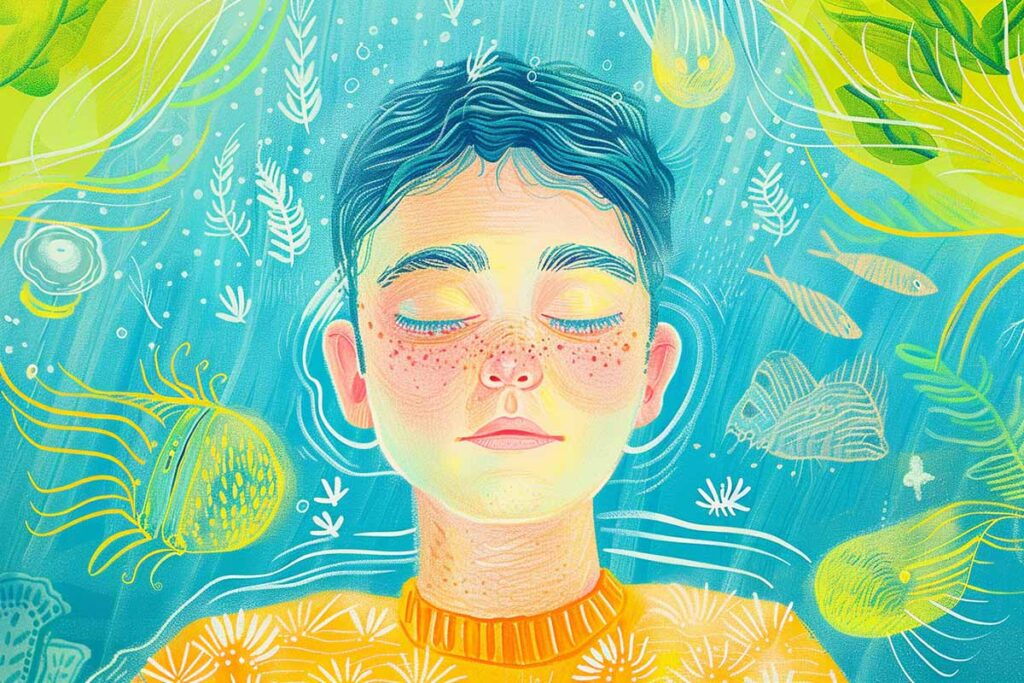
The 9-Stage Waterworld Journey
Becoming the Mariner of Your Inner Waterworld
Stage 1: Surface Breathing (Learning Not to Sink)
Before you can breathe below the surface, keep your head above water.
Your face rests where air meets tide; your feet still find the stones. You’re tense, yet you breathe.
Core idea: Floating is already a victory.
- Notice emotion rising: feel the cool water; say, “I’m tense right now.”
- Name the wave: anxiety, anger, sorrow—naming softens their power.
- Remind yourself: “My feet can still touch the stones. I am safe.”
- Practise surface breathing: 4 in, hold 7, out 8. This is your anchor.
You don’t need to plunge yet. For now, resting on the surface and finding stillness among ripples is enough.
Stage 2: Testing the Water (Brief Dips)
Lower your head, immerse your face, listen to the quiet below.
Your hand still holds the rail—a quiet promise of safety.
Core idea: Protect the fragile balance you’ve begun.
- Allow short dips: face in, hand on rail, knowing “I can rise; I can hold.”
- Let art hold the feeling: sketch the silence; shape what words can’t.
- Keep an anchor: return to light when you need.
- Learn the language of water: hold your breath without panic.
After a few gentle trials, you loosen your grip—still within reach of shore.
Stage 3: Floating & Self-Rescue (A Kind Rhythm)
You float, you tread, you find your breath again. Movements soften; the water’s rhythm becomes your own.
Core idea: Self-rescue isn’t struggle—it’s gentleness.
- Ground the body: feel your feet on earth; touch a rough stone.
- Pocket stone: a small reminder of your path back when waves rise.
- Journal the practice: words or images for each attempt.
- Progressive release: let the body remember how to float.
Begin forward motion
- Find your breathing tempo—not to resist water, but to move with it.
- Build soothing rituals you can trust when emotion swells.
Stage 4: Learning to Swim (Choosing Your Stroke)
The chest loosens. Emotion no longer drags you under. Water grows kind.
You begin to move by choice, not just survive.
Core idea: Different feelings need different strokes.
- Breaststroke — speak needs gently; practise clear requests.
- Freestyle — release built-up energy; expand your regulation toolkit.
- Backstroke — look up and reframe; practise new perspectives.
- Butterfly — meet difficulty with power and timing.
Some days you’ll return to the shallows. No shame. Returning to shore is part of swimming.
Stage 5: Deep-Water Self-Rescue (Crisis Skills)
When a sudden wave hits, you know what to do.
Core idea: Have your rescue kit ready.
- STOP: Stop. Take a breath. Observe. Proceed.
- Emergency anchors: five items that return you to now (stone, scent, music, words, texture).
- Signal for help: know when to reach out; build your supports.
- Step back and watch: observe feelings like a film; don’t be swept away.
- Your oxygen: the tools you trust to keep breathing in deep water.
Stage 6: Comfortable in Water (Living With Emotion)
Water becomes a mirror, not a threat.
Core idea: Emotion is a messenger, not an enemy.
- In sorrow, you find tenderness.
- In anger, you find boundary.
- In anxiety, you find awareness.
- In fear, you find a kind of truth.
Feelings point to what matters. You stay centred and are no longer carried off.
Stage 7: Snorkel & Explore (Finding Beauty Below)
One day you dive with a snorkel. Light refracts; the hush holds everything.
Core idea: The places you feared reveal their beauty.
- Explore through art: paint the light; shape the hidden creatures.
- Let feeling feed creativity; turn current into colour and form.
- Find power in vulnerability; face what you once avoided.
- Discover the gift in the shadow; meaning in what seemed like flaw.
Stage 8: Deep Dive Healing (Into the Open Deep)
You shoulder an oxygen tank and go further—past reefs of childhood wounds, past wreckage of old losses, towards long-silent rooms of memory and voice.
Core idea: Touch the deep with tools and courage.
- Dive with support when needed—therapist, guide, trusted ally.
- In the dark, find luminous creatures: resilience, wisdom, pearls from pain.
- Bring treasures back: surface more whole than before.
- Make peace with trauma by integrating it into your story.
You dare to descend because you know how to rise.
Stage 9: Transformation (Growing Gills)
At last, you no longer need the tank. You grow gills.
You breathe naturally in deep water.
Core idea: Emotion becomes your realm.
- Fluent in the language of feeling; moving with its rhythm.
- You know the tides, the sleeping undercurrents, the warm streams.
- You surface for sun, dive for treasure—by choice.
- You guide others; you can meet them in their depths.
- You don’t conquer emotion—you move with it.
You’ve become the navigator of your inner seas—the mariner within.
Art Therapy Practice
Create for the stage you’re in:
- Watercolour your sea: let colours mingle; notice which waters you’re in.
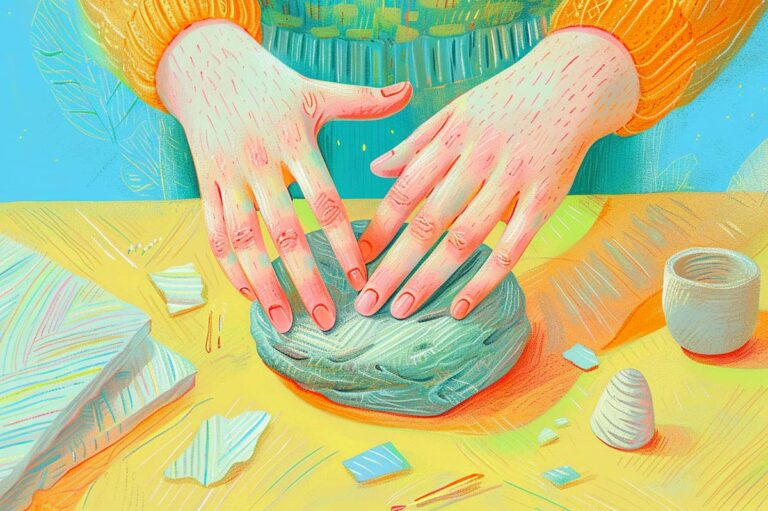
- Shape “you, today” in clay: at the rail, floating, or diving?
- Write a letter to your future swimmer: remind them you’re learning.
- Build an anchor kit: five items that bring you back to now.
- Map your waters: mark shallows, deeps, rips and warm currents.
A Last Reminder
Everyone learns at a different pace. Some days you’ll return to the shallows; that isn’t failure—it’s part of swimming.
What matters is not how far you’ve gone, but that you keep learning—gently—to breathe in water.
The sea receives every swimmer, fast or slow.
Your sea of feeling receives all of you.