
Back to the Origin
Introduction
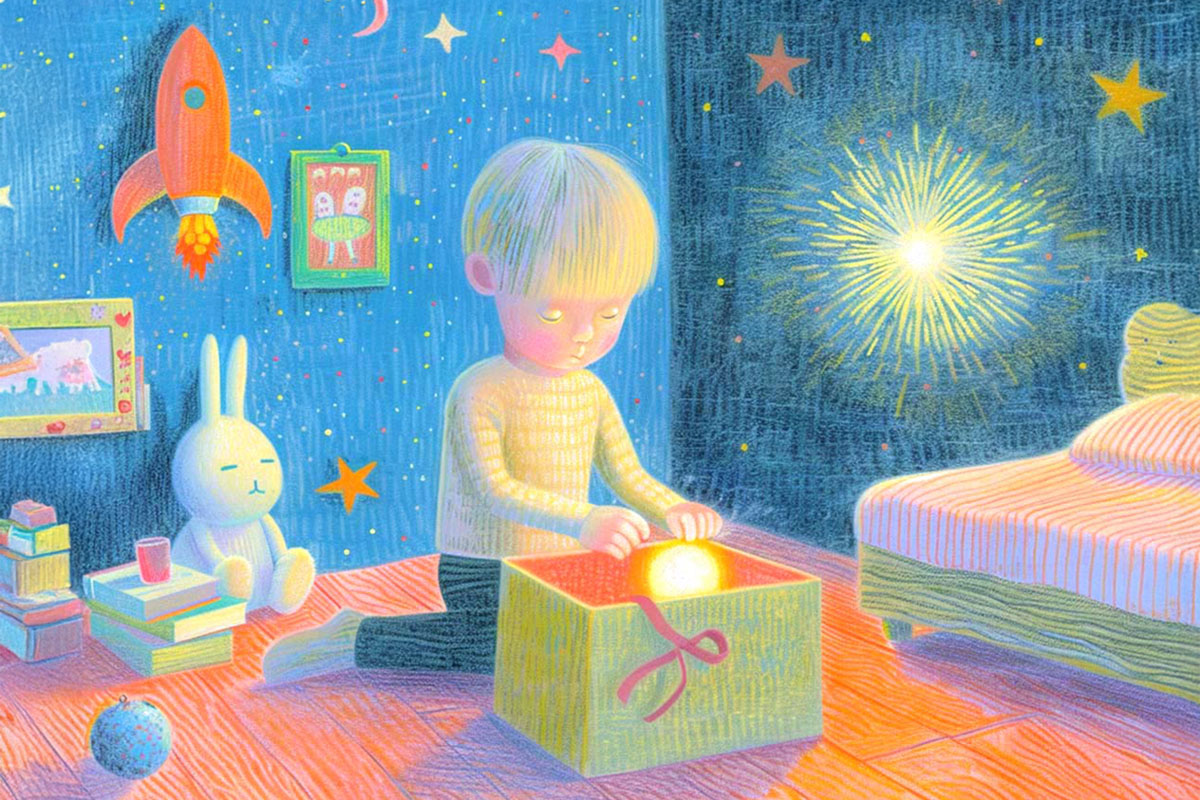
Remember your childhood room? The posters on the wall, your favorite toys, the books you couldn’t put down, or even the secret piles in the corner? Every detail tells a story about who you were — and who you still are today.
In this workshop, you’ll be gently guided to “walk back” into that room through imagination, memory, and art. Using simple materials like cards, colors, and collage, you’ll recreate your personal childhood space and discover what it reveals about your dreams, needs, and inner world.
Together, we’ll share stories, connect the past with the present, and create a symbolic “gift” for your younger self. You’ll leave not only with artwork, but also with a fresh sense of clarity, healing, and the strength to carry those childhood treasures into your life now.
 No art skills required — just curiosity, openness, and a willingness to explore.
I. Program Overview
Core Concept
By reconstructing the memory map of one’s childhood room, participants are guided through a journey of self-healing: from sensory recall → object projection → emotional awareness → self-dialogue → integration and transformation.
Program Goals / Intended Benefits
- Reconnect with the childhood self – Recover forgotten desires and inner strengths.
- Integrate past and present – Build a coherent life narrative.
- Release repressed emotions – Facilitate emotional flow through artistic expression.
- Reconstruct self-worth – Draw present strength from childhood resources.
- Promote self-reconciliation – Repair the relationship between the inner child and the adult self.
Target Participants
- Adults seeking to explore identity.
- Individuals in transitional life stages.
- Support people with childhood trauma history to build felt safety and self-stability.
- Reduce overwhelm and strengthen self-regulation capacity.
- Rebuild internal resources and a sense of continuity
- People exploring parent–child dynamics.
- General public interested in self-growth.
II. Theoretical Foundations
Therapeutic Approaches Referenced
- Object Relations Theory – Room objects as projections of transitional objects.
- Narrative Therapy – Reconstructing continuity in life stories.
- Gestalt Therapy – Here-and-now awareness and completing unfinished business.
- Jungian Analysis – The room as a container of the personal unconscious.
- Attachment Theory – Rebuilding and repairing the safe base.
Symbolic Meanings of the Room
- Wall posters → Ideal self, role models, projected dreams.
- Bookshelves/collections → Knowledge-seeking, safe attachment, development of interests.
- Desk items → Current focus, expressions of pressure, daily rhythm.
- Corners/piles → Shadow aspects, repressed emotions, unseen needs.
- Room smells → Primary memories, emotional tone, family atmosphere.
III. Full Program Flow
Stage 1: Sensory Awakening & Safety Grounding (20 min)
- Environment Setup: Soft lighting, cushions, background childhood-era music, familiar scents (wood, books, fabric).
- Guided Visualization:
“Close your eyes… breathe deeply three times… Imagine walking down the hallway of your childhood… your hand on the doorknob… slowly opening the door and stepping inside…” - Exploration Questions:
- What smells do you notice?
- Where is the light coming from?
- What sounds do you hear?
- How does the floor feel under your feet?
- What is the temperature of the air?
Sensory and Emotional Exploration
This process invites participants to gently return to their inner world through sensory and emotional awareness.
It begins with the five senses — sight, hearing, smell, touch, and air — then gradually moves inward to the sixth sense: emotion, intuition, and embodied memory.
The tone throughout is soft and grounding, supporting participants with high sensitivity or trauma backgrounds.
Exploration Questions:
1. Sensory Awakening (The Five Senses)
1.1 Sight (Vision)
When you first enter the room, your eyes begin to explore. Notice what they are drawn to, what feels bright or hidden, and how light shapes your sense of space.
- What is the first thing your eyes notice as you enter the room?
- Where is the light coming from – a window, a lamp, or a glow from outside?
- How does this light change the mood of the space – warm, cold, soft, or sharp?
- Which colours or objects stand out to you the most?
- Is there anything in shadow or hidden from view?
- How do these visual details make you feel – calm, curious, alert, or uneasy?
1.2 Hearing (Sound)
Once the eyes settle, your ears begin to listen. Some sounds are near, some distant, some remembered.
- What sounds are present in the space – music, wind, footsteps, silence, or your own breath?
- What direction do these sounds come from – inside the room or beyond the walls?
- How loud or soft are they?
- Which sound feels most comforting, and which one unsettles you?
- Do any sounds remind you of your childhood home or a certain time?
- As you keep listening, what new layers of sound appear?
1.3 Smell (Scent)
Scents often awaken memories more deeply than sight or sound. Let them guide you gently.
- What smells do you notice as you breathe in?
- Are they natural (wood, books, fabric) or artificial (soap, paint, plastic)?
- Do any of these scents feel familiar or connected to someone you remember?
- How does your body respond to these smells – do you relax, tense, or feel transported elsewhere?
- What emotion arises – comfort, longing, sadness, or warmth?
- If your childhood room had a scent, what would it be?
1.4 Touch (Tactile)
Your skin holds memory. Notice what your body touches and how it reacts.
- What textures are near you -soft fabric, smooth paper, rough wood, cool metal, or something else?
- How does the floor feel beneath your feet – solid, warm, cool, or uneven?
- What temperature does your skin sense – is the air gentle or sharp against it?
- As you touch objects, do you feel drawn closer or want to pull away?
- Which surfaces make you feel safe or grounded?
- If you could hold one object from this room, what would it be and why?
1.5 Taste and Air (Atmosphere)
The air itself carries feeling – temperature, texture, and subtle taste.
- What is the temperature of the air – warm, crisp, still, or moving?
- Does the air feel light or heavy on your skin?
- How does the room’s atmosphere affect your breathing – deep, shallow, or steady?
- If this moment had a taste, what would it be – sweet, bitter, salty, or neutral?
- Does the air remind you of a particular time or place?
- How does this atmosphere shape the emotion in the room – alive, nostalgic, peaceful, or distant?
2. The Sixth Sense
(Inner Awareness × Emotion × Consciousness × Feeling)
As the five senses awaken, awareness turns inward.
This stage invites you to sense the inner body – emotion, energy, and subtle shifts that cannot be seen.
It is a slower rhythm of noticing: not what surrounds you, but what moves through you.
2.1 Bodily Sensation
- Which part of your body feels most alive, warm, or tense right now?
- What happens in your breath – steady, shallow, or held?
- How does your body respond to this space – softening, tightening, or grounding?
- Where do you feel safety or unease within you?
- What emotion might live inside that sensation – calm, fear, anticipation, or comfort?
- If your body could speak right now, what would it say?
2.2 Sense of Time
- In this room, does time feel fast, slow, or suspended?
- If your body could describe the pace of this moment, what would it say – “I’m rushing,” “I’m waiting,” or “I’m here”?
- How does your sense of time change as you stay longer?
- Do you feel trapped in time or free within it?
- Does this rhythm mirror your emotional state today?
- What moment from the past does this time remind you of?
2.3 Emotional Climate
- If the atmosphere of this space were weather, what would it be – bright, misty, heavy, or breezy?
- What colour or temperature does this emotion carry?
- Is this emotional air steady or shifting?
- What emotion fills the space – peace, loneliness, excitement, or nostalgia?
- How does your breathing change with this emotional weather?
- If this emotion could speak, what would it whisper?
2.4 Symbolic Presence
- If your childhood room had a guardian, guide, or quiet energy watching over it, what form would it take – an animal, a light, a person, or something abstract?
- Where in the room does this presence stand or move?
- How does it look at you – with curiosity, distance, or care?
- How does this presence make you feel – protected, cautious, comforted, or unsure?
- If it could hand you a small object, what would it be?
- What message might it be whispering to you right now?
2.5 Inner Voice
- As you step into this room, what is the very first sentence or feeling that arises inside you?
- Does this voice sound young, quiet, critical, or tender?
- Where in your body do you feel this voice – chest, throat, stomach, or heart?
- What emotion accompanies it – longing, relief, sadness, or joy?
- What does this voice need you to hear right now?
- If you could answer back, what would you say?
3. Reflection
This exploration guides participants from outer perception to inner resonance – from seeing and hearing to feeling and understanding.
It mirrors Stage One: Inner Emergence (Survival) in the Five-Stage Art Therapy System,
where awakening the senses becomes the foundation for recognising emotion, reclaiming safety, and re-establishing connection with the self.
“The awakening of the senses is not only physical but emotional –
a return to the awareness of being alive,
of feeling one’s inner landscape through the body and imagination.”
Supplementary Summary Table
| Sensory Focus | Core Intention | Emotional Outcome |
|---|---|---|
| Sight | Visual memory and spatial orientation | Reconnection to environment and curiosity |
| Hearing | Attunement and presence | Recognition of emotional resonance in sound |
| Smell | Memory and emotional recall | Access to deep personal associations |
| Touch | Physical grounding | Safety, containment, and body awareness |
| Air & Taste | Atmospheric perception | Subtle awareness of emotional tone |
| Sixth Sense | Internal awareness | Integration of body, feeling, and meaning |
Stage 2: Object Scanning & Memory Reconstruction
- Room Map Drawing: Provide A3 paper for participants to sketch a floor plan of the room.
- Four Key Zones:
A. Walls – Top 3 posters? What did they represent? Which still influences you today?
B. Bookshelves – Top 3 treasured items? Which book was most reread? Which toy gave comfort?
C. Desk – What was often spread out on the desk? What secret treasures were hidden in drawers?
D. Corners/under the bed – What was piled here? What was hidden? What feeling does this space evoke?
Stage 3: Artistic Creation & Expression
- Materials: Colored index cards (5×8cm), markers, crayons, scissors, glue, magazines, A2 base sheet.
- Steps:
- Object Cards – Draw each key object on a card; focus on emotion, not realism.
- Room Reconstruction – Arrange cards on the base sheet to rebuild the room layout.
- Emotional Annotation – Write 1–3 feeling words next to each object; connect objects with colors/lines.
Stage 4: Narrative Dialogue & Meaning- Making
- Three Levels of Dialogue:
- Descriptive Sharing – Present room map, explain 3 most important objects, share one story.
- Emotional Exploration – What needs were met? Which object represents “you”? What are you still seeking?
- Integrative Reflection – How are childhood desires carried forward? What resources do you have now? What did this room teach you?
Stage 5: Transformation & Future Integration
Symbolic Rituals:
- Letter Across Time – Write a short letter to your childhood self.
- Gift Card – Create a card with something you want to give your younger self; add it to the room map.
- Take-Home Power – Choose one important card, put it in an envelope, and keep it as a reminder of your inner resource.
Key Reflective Questions
Values Awareness
- What mattered most to your childhood self?
- What did those values give you – safety, joy, connection, or purpose?
- Are these values still important to you today?
- How have these values shaped the person you are now?
- Which of these values have faded or been forgotten along the way?
- How might you invite them back into your present life in a meaningful way?
Needs Connection
- Which needs from your childhood are still present in you today?
- Which of those needs are currently being met – and which are still unmet?
- Which unmet needs can now be cared for by your adult self?
- How does your body or emotion let you know when a need is being ignored?
- What would it look like to meet that need with gentleness instead of pressure?
- What resources (friends, skills, interests) do you have today to support those needs?
Action Outlook
- Which childhood strength do you want to carry into your current life?
- What does this strength look like when expressed in your daily actions?
- In which area of your life (work, relationships, leisure) could this strength be most alive?
- What new possibilities might open if you allowed this strength to guide you?
- What is one small action you can take in the next 7 days to honour this childhood desire?
- How will you remind yourself to keep this action kind, realistic, and sustainable?
Support & Commitment
- Who or what can help remind you of this strength?
- What kind of environment helps you stay grounded and connected to your truth?
- If you feel lost again in the future, how will you return to this inner strength?
- What symbol, image, or phrase could serve as a personal reminder of your growth?
- What commitment would you like to make to your childhood self today?
- How will you celebrate or honour this commitment as it becomes part of your life?
Closing Reflection
These questions are not about fixing or forcing change –
they are gentle invitations to notice how your past still breathes within you,
and how your present choices can quietly reshape the future.
Solution-Oriented Activities
New Object Addition
- On the room map, draw or attach one “present-day gift” for your childhood self.
- This object symbolizes the support, safety, or resource you can now provide (e.g., a lamp, a diary, a trusted friend).
Action Commitment Card
- The strength I’ll carry forward is _______
- I’ll bring it into my life by _______
- My reminder or support system will be _______
- The quality I want to grow is _______
- I’ll practice it through _______
- Something that will help me stay on track is _______
- The part of me I want to honour is _______
- I’ll express it in my daily life by _______
- I’ll remind myself of it with _______
- The energy I want to nurture is _______
- I’ll keep it alive by _______
- My support or symbol for this is _______
- The lesson I’m taking with me is _______
- I’ll apply it in real life through _______
- I’ll remember it when I _______
- The value I want to live by is _______
- I’ll embody it through _______
- What helps me stay aligned is _______
- The intention I’m setting is _______
- I’ll bring it into action by _______
- My reminder or anchor will be _______
- The part of me I want to strengthen is _______
- I’ll give it space by _______
- I’ll keep it close through _______
- The feeling I want to return to is _______
- I’ll create it in my life by _______
- Something that helps me remember it is _______
- The promise I’m making to myself is _______
- I’ll live it out by _______
- My gentle reminder will be _______
Future Visualization: Meeting Your Future Self
Imagination
Imagine your future self, ten years from now.
What would they notice about how far you’ve come?
Picture your future self walking into this reconstructed room.
What would they say to you? What would they thank or encourage you for?
Observation
Imagine your future self looking at the artwork you’ve made today.
What do they see in it that you might not yet see?
Visualise your future self standing where the air feels clear and open.
What are they doing differently, and how does their energy feel?
Emotional Connection
Your future self places a gentle hand on your shoulder.
What would they thank you for doing, or finally letting go of?
Picture your future self walking into this room again.
What feeling do they bring — calm, courage, or peace?
Understanding
If your future self could leave you one message, written softly on paper —
What would it say?
Your future self walks through a space filled with light.
What part of your journey would they want you to cherish most?
Inspiration
If your future self could whisper one piece of guidance,
what would you hear — and where in your body would it land?
See your future self turning back toward you.
What encouragement would they give for the next small step you’re about to take?
Integration
Now imagine your future self looking into your eyes.
What silent promise passes between you — one you both already understand?
Intended Outcomes
- Moves participants from Inner Problem Manifestation → Problem Localization → Meaning Transformation → Action Planning → Integration & Closure.
- Provides not only emotional release, but also practical steps for daily life.
- Leaves participants with tangible symbols – a gift object, an action card, and a take-home strength card – to sustain healing beyond the session.
Stage 6: Group Witnessing & Closing
- Witness Circle – Each participant shares their biggest discovery (2–3 minutes).
- Peer Reflection – Group members offer supportive responses.
- Facilitator Integration – Mirror participants’ key themes and provide closure.
- Closing Words:
“You have all walked back into that room. You saw your childhood self. That child has always been there, never gone. With today’s understanding and acceptance, let the past and present shake hands in reconciliation.”
IV. Advanced Program Variations
- Individual Art-based Session (80 min) – One-on-one depth exploration for personal or difficult experiences.
- Parent–Child Workshop (2 hrs) – Parents and children each create their room; share stories to bridge generations.
- 6-Week Series – Week 1: Sensory recall | Week 2: Object analysis | Week 3: Emotional mapping | Week 4: Self-dialogue | Week 5: Resource integration | Week 6: Designing the future room.
- Online Format – Guided audio meditation, mailed art kits, virtual group sharing.
V. Evaluation Tools & Indicators
- Pre-test – Childhood memory clarity scale, self-continuity measure, baseline emotional awareness.
- Process Observation – Creative engagement, emotional depth, narrative richness, body relaxation.
- Post-test – Integration sense, awareness of childhood resources, willingness for behavioral change.
- Qualitative Feedback – Most touching moment, biggest discovery, actions to carry forward.
VI. Facilitator Preparation
- Professional Competence – Art therapy training, group facilitation, trauma-informed care, personal therapy experience.
- Self-Preparation – Explore own childhood room, reflect on personal triggers, be ready to contain emotions.
- Space & Materials – Quiet, private space; art materials; sharing circle seating.
- Risk Management – Strategies for trauma recall, emotional breakdown support, referral pathways.
VII. Marketing & Outreach
- Target Groups –
- Primary: Adults (25–45) seeking self-exploration.
- Secondary: Parents wanting to improve relationships.
- Potential: Corporate wellness programs.
- Sample Copy:
“Do you remember the posters on your childhood wall? The toys, the books, the hidden piles in the corner? Each object is a key. Unlock your inner treasure, reconnect your past and present self. Through art and storytelling, rebuild your room map, heal, integrate, and carry home your inner strength.”
VII. Impact & Sustainability
Expected Benefits
- Individual: Greater self-acceptance, stronger life narrative, emotional healing.
- Relational: Better parent–child understanding, intergenerational reconciliation, deeper connection.
- Societal: Promote mental health awareness, reduce stigma, build supportive communities.
Sustainability Strategies
- Build participant community.
- Develop online platforms.
- Train facilitators.
- Publish related materials.
- Create at-home toolkits.
IX. Supplementary Resources
- Facilitator scripts.
- Question card set.
- Sample artworks gallery.
- Music playlist.
- Reading list.
- Supervision resources.
© 2025 Art Therapy Lab – Back to the Origin